From footpaths to the Phalke Award: Mithun Chakraborty’s journey of reinvention

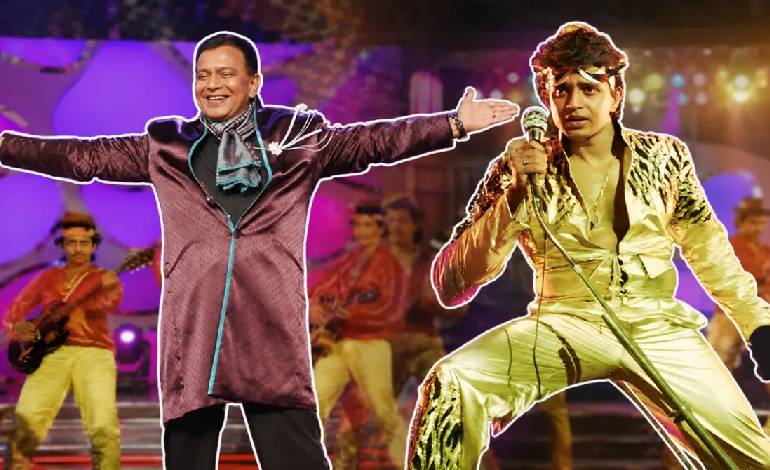
Mumbai: Whether you know him as the energetic “Grandmaster” from Dance India Dance or the man who made an entire generation groove to Disco Dancer, Mithun Chakraborty has remained one of Indian cinema’s most beloved names for decades. Behind the iconic moves, blockbusters and accolades lies a story of struggle, resilience and reinvention.
Born Gouranga Chakraborty in Kolkata, Mithun completed a BSc in Chemistry from Scottish Church College before life took a sharp turn. During the politically turbulent late 1960s and early 1970s, he was associated with the Naxalite movement. The accidental death of his only brother became a turning point, prompting him to walk away despite the risks.
Determined to rebuild, he joined FTII Pune to study acting. His debut in Mrinal Sen’s Mrigayaa (1976) was anything but ordinary — he won the National Film Award for Best Actor as a newcomer.
Yet success did not come easily. Like many who arrived in Mumbai with big dreams, Mithun faced rejection and hardship. Reports from that time say he slept on footpaths when he couldn’t afford housing and faced discrimination for his dark complexion in an industry that favoured a different look.
The breakthrough came with Surakksha (1979) as ‘Gunmaster G9’, but it was 1982’s Disco Dancer that turned him into a cultural phenomenon. Songs like I Am a Disco Dancer and his signature moves made him a household name in India and abroad, with the film becoming a blockbuster in the Soviet Union and several Asian countries.
In the 1990s, he reinvented himself again. Shifting base to Ooty and setting up Monarch Studios, he produced and starred in low-budget action films that built a loyal fan base in smaller towns. During this phase he also won two more National Film Awards for Tahader Katha (1992) and Swami Vivekananda (1998).
As television rose, Mithun found a new audience as “Grandmaster” on Dance India Dance in the 2000s. His warmth and encouragement made him a favourite with a new generation. He later entered public life, serving as a Rajya Sabha MP from 2014 to 2016.
Today, with over 350 films in Hindi, Bengali, Odia, Bhojpuri and other languages, his career has been honoured with three National Film Awards, a Filmfare Award, the Padma Bhushan, and the Dadasaheb Phalke Award for his contribution to Indian cinema.
From leaving a troubled past and enduring poverty in Mumbai to becoming one of India’s most celebrated actors, Mithun Chakraborty’s journey remains a reminder that reinvention is possible with perseverance.