When animals turn doctors: The science of ‘zoopharmacognosy’

New Delhi: Animals may be treating themselves with plants long before humans did — and scientists now call it zoopharmacognosy. The term combines ‘zoo’ for animals, ‘pharmaco’ for medicines, and ‘gnosy’ for knowledge, and describes how wildlife uses plants to heal.
A recent review by G. Allen et al. in Scientific Reports (2026) highlights the practice among orangutans in Indonesia’s Sebangu forest in Central Kalimantan. Researchers observed orangutans mixing saliva with leaves of dracaena, a member of the asparagus family, and applying the paste to their bodies. The behavior is believed to help purify the air and relieve muscle pain and joint discomfort, especially while carrying infants.
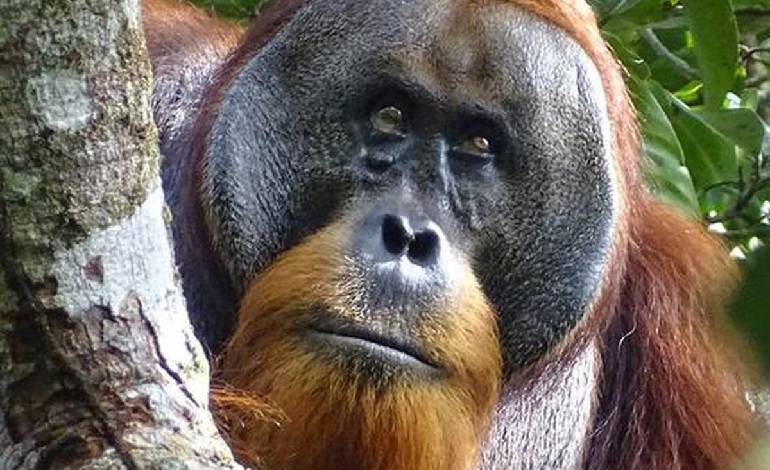
A male Sumatran orangutan named Rakus was photographed in August 2022 at the Suaq Balimbing research site, two months after self-treating a wound with a medicinal plant.
Botanists from Gujarat University, Ahmedabad, have earlier noted that dracaena has antioxidant, antibacterial, antifungal, and anticancer properties (Vasava et al., Int. J. R. Tech., 2025).
The behavior is not limited to orangutans. Chimpanzees in Nigeria have been seen swallowing leaves of Desmodium gangeticum, called ‘shalaparni’ in India, to expel skin parasites. The plant has a long history in human medicine too. Ancient Ayurveda practitioners like Sushruta used parts of Desmodium gangeticum in formulations for asthma, hemorrhoids, and typhoid.
“What our ancestral primates practised millennia ago has come down to us,” the review notes. Today, humans use several plants for similar purposes — from snake plant and ginseng to oregano — for medicinal benefits.
Scientists say studying zoopharmacognosy could offer new leads for drug discovery and a deeper understanding of traditional medicine systems.