Seabird droppings could help tropical islands survive rising seas: Study

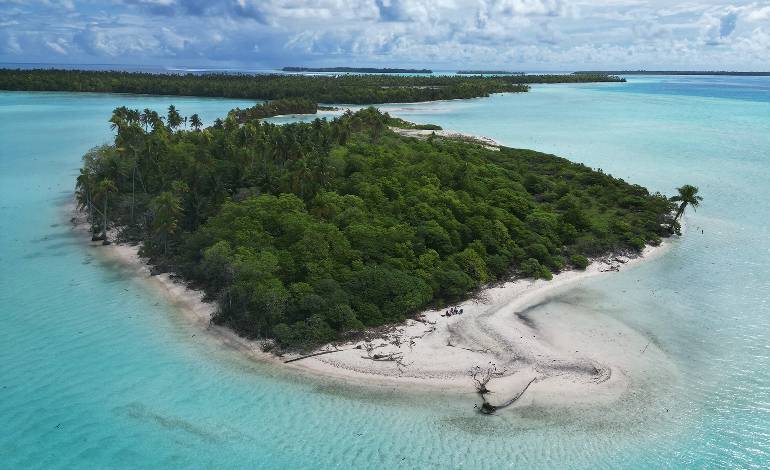
Restoring seabird populations and native vegetation on low-lying tropical islands could give them a “fighting chance” against rising seas, a new study has found.
Habitat loss and invasive rats have wiped out seabirds on many tropical atolls. Now, scientists say bringing them back could protect islands from rising seas after discovering that bird droppings “supercharge” processes that help atolls grow.
“Islands are dynamic systems that shift and build over time,” said lead author Prof Nick Graham from Lancaster University, England. “Seabirds and native vegetation enhance geo-ecological functions that can help islands cope with sea level rise.”Graham’s team found that coral reefs around islands with “thriving” seabird populations grew up to 2.5 times faster than those around rat-infested atolls.
“Seabirds deposit large quantities of nutrients through their droppings, fertilising the reef,” he told Positive News, adding that reefs act as breakwaters during storms.
Production of sediment — the building blocks of tropical islands — was also significantly higher on seabird-rich atolls, allowing the islands to grow. Root systems of native plants, meanwhile, were shown to “hold islands together”.
The study, which examined 28 islands in the Pacific and Indian oceans, concluded that restoring native plants and seabirds on some atolls could help them “keep pace with even a 2C sea level rise projection”.
The researchers, however, noted that cutting emissions — and fast — is also crucial to their survival.