Thousands of flamingo chicks hatch at Turkey’s Lake Tuz after conservation efforts

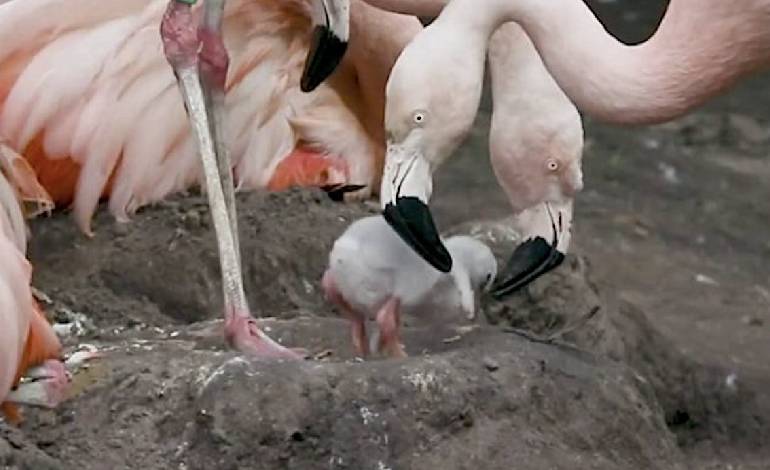
Turkey: In a boost for conservation, thousands of flamingo chicks have hatched at Lake Tuz, one of the world’s key flamingo breeding grounds. The salt lake had nearly dried up five years ago, causing mass deaths of hatchlings.
Lake Tuz, once the second-largest lake in Turkey, faced desiccation due to high temperatures and lack of rainfall. The conditions led to the deaths of thousands of greater flamingo hatchlings in 2021, according to reports.
After a series of initiatives to protect the “climate change hotspot” on the Central Anatolia plateau, the lake is now hosting a new generation of chicks. Drone footage from June 10 shows about 5,000 young birds protected by their parents, learning survival skills like feeding and avoiding threats in their natural habitat.
Lake Tuz, which means “salt lake” in Turkish, is one of Turkey’s most important wetlands. It draws nature enthusiasts and wildlife photographers for its seasonal color changes and mineral-rich water, mud, and salt.
“We will more than compensate for the losses of previous years by raising the population with these chicks during the season,” said Fahri Tunç, President of the Bird’s Eye View and Ecology Association. “This is great news. The current number is more than double that of last year, which was more than double that of the year before,” Tunç told Turkey’s news outlet DHA.
NASA reported in 2021 that the Mediterranean Basin, where Lake Tuz is located, is a climate change hotspot. It has warmed at a greater rate since the pre-industrial period compared to the global average. Satellite images at the time showed the lake was almost completely drying up, threatening wildlife that relies on algae for food and nesting habitat.
The lake has no outlet. It is fed by groundwater from northern mountains, two major streams, and spring rainfall. According to findings published in Regional Environmental Change, water spanned 98% of the lakebed in 1988. By the start of 2001 only 20% was covered, and in 2016 the lakebed was dry. The same conditions returned in 2021 and caused mass flamingo chick deaths.
The following year, Turkey’s General Directorate for the Protection of Natural Assets launched a water supply project at the lake, located 90 miles southeast of Ankara. Designed to protect new nestlings, it pumps water into wetland areas where chicks nest.