Rescued orangutans are now raising a new wild population in Sumatra

Aceh: Fifteen years ago, conservationists began releasing rescued orangutans into the Jantho Pine Forest Nature Reserve in Indonesia’s Aceh province. It was a protected forest in Sumatra where no Sumatran orangutans were living at the time.
The animals came from difficult backgrounds. Some had been orphaned and raised in human care. Others were rescued from conflict or captivity and spent months, even years, in rehabilitation before they could be returned to the forest.
Orangutans cannot simply be taken from captivity and released. Young orangutans usually spend years with their mothers learning critical skills — which fruits are safe to eat, how to find food through the seasons, how to build nests in the trees, and how to move through the rainforest canopy. At rehabilitation centers, rescued orangutans were taught those same lessons. Only when they could forage, climb, build nests and survive without human help were they considered ready for release. Jantho offered a large, protected forest where a new population could grow away from many of the threats orangutans face elsewhere.
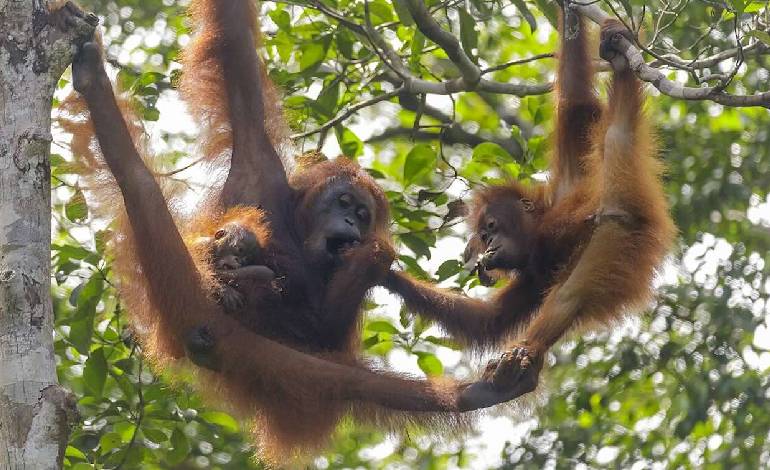
The plan worked. Soon, some of the females began giving birth. Those babies were not released from cages. They were born wild.
Mothers are now teaching a new generation how to live as orangutans. This is especially important for the Sumatran orangutan, one of the world’s most threatened great apes. Females raise a single infant for years before having another, giving orangutans one of the longest gaps between births of any mammal. Researchers confirm that at least 10 babies have been born in the reserve.
Since 2011, conservationists from the Sumatran Orangutan Conservation Program have brought nearly 200 Sumatran orangutans to Jantho.
What began as a place to release rescued individuals has become something larger — a home where a new generation of wild Sumatran orangutans can flourish, born free in the forest.