Chester Zoo hatches 5 secretarybird chicks in first breeding success in 95 years

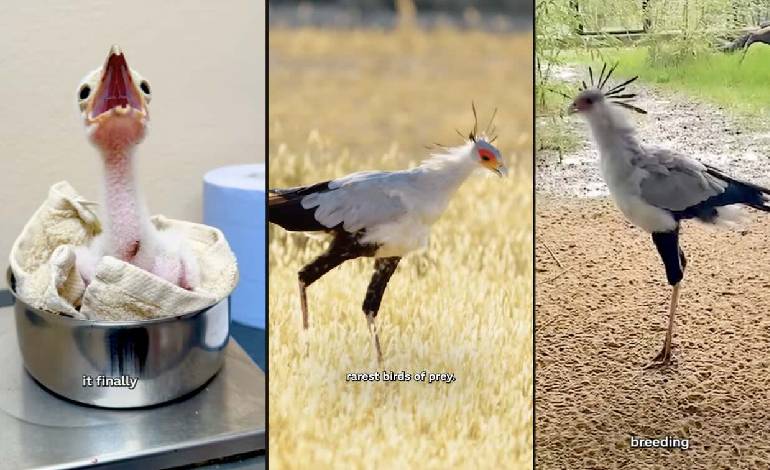
Chester: Chester Zoo has reported a first in its 95-year history. For the first time, secretarybirds have bred successfully at the zoo, producing five chicks.
The chicks hatched to parents John and Jolene. The pair arrived at the zoo as part of coordinated international efforts to help safeguard the future of one of Africa’s rarest birds of prey.
The endangered African birds are part of an international conservation breeding program. The zoo described the hatching as “a landmark breeding breakthrough that we hope will help secure the future of the endangered species.”
The success is significant for the wider population. Across the European breeding program, there are just 79 secretarybirds. In the last year, only three other chicks have hatched elsewhere.“Our experts believe the techniques developed here in Chester could now help other conservation zoos boost breeding success across Europe,” the zoo said in a media release.
Secretarybirds are among the world’s most unusual birds of prey. Unlike eagles and hawks, they hunt on foot, striding across African grasslands on long, thin legs in search of prey. Their scientific name is Sagittarius serpentarius — meaning “the archer of snakes.” It reflects their remarkable ability to hunt and kill venomous snakes by stomping on them.“Seeing five healthy chicks hatch in such a short space of time is an incredible achievement for everyone involved,” said the zoo’s birdkeeper Jamie Cartwright-Stock.
The species faces serious pressure in the wild. In recent decades, secretarybird numbers have declined to “as few as 6,700 birds” left, as vast areas of Africa’s grasslands have been lost to agriculture and urban development.
The species is listed as Endangered on the International Union for Conservation of Nature’s Red List.“With five new chicks, we’re playing a leading role in the conservation of these incredible birds,” said Andrew Owen, the zoo’s Head of Birds. “By monitoring and sharing everything we learn about these chicks, we can help improve breeding success across the entire safety-net population in zoos.”