New desalination tech turns ocean waste into resources

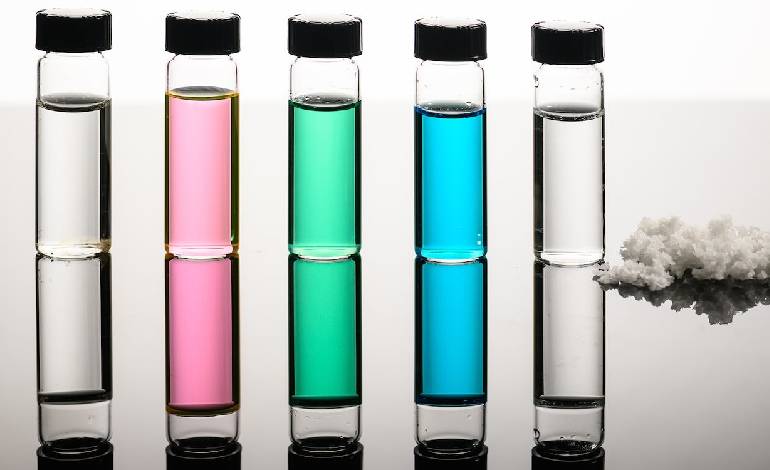
A new energy-efficient desalination system produces fresh water without chemical additives and transforms leftover salts into useful materials, according to research from the University of Rochester. The technology could address major drawbacks of current desalination methods used from California to the Middle East.
Common techniques like reverse osmosis and thermal distillation are energy-intensive and require chemical pre-treatment of water. They also leave behind concentrated saltwater brine that harms marine life when dumped back into the ocean by raising salinity and lowering oxygen levels.
The University of Rochester team’s solar-thermal approach avoids both problems. Published in Light: Science & Applications, the process uses no chemical additives and leaves no brine behind.
The system uses solar panels made of black metal etched with femtosecond lasers. The laser treatment makes the surface super light-absorbing and super-wicking, so it pulls water across the panel extremely well. An active region absorbs nearly all solar radiation to distill water, while leftover salts and minerals are deposited into untreated sides of the panel. This keeps the active region unclogged for continuous operation.
Previous solar-thermal desalination worked well in labs using simulated seawater of just water and sodium chloride. But real ocean water contains magnesium and calcium that crystallize into crusty, non-porous layers on surfaces and block water flow. It’s similar to how shower heads clog, except seawater has hundreds of times more salts than tap water.
To solve this, Professor Chunlei Guo and his team etched grooves into the black metal so salts and minerals would slough off. They also used the “coffee ring effect” — the same physics that leaves a ring of coffee particles when a spill dries. The design pushes salts outward to a passive collection area.
Testing with water from the Pacific, Atlantic and Indian Oceans, Guo’s team showed the surface could stay self-cleaning. It extracted freshwater while directing remaining salts to collection points without losing efficiency.
Another advantage is that instead of liquid brine waste, the system extracts nearly 100 percent of salts in solid form. That could supply table salt and also yield precious minerals like lithium, which powers electric vehicles and electronics. “Mining lithium from the earth has proven to be very taxing from an energy and environmental standpoint, so pulling lithium directly from saltwater could be a very important future route,” Guo said.
In a related paper in the Journal of Materials Chemistry, the team showed how nanoparticles of hydrogen titanate embedded in the panel’s grooves can separate lithium from other salts. Using water from Great Salt Lake, they extracted about 50 percent of the lithium from salts left behind after desalination.
Guo sees the technology as inherently scalable. It could improve global access to drinking water while building a more sustainable supply of critical minerals.