Male octopuses fiercely guard specialized sex arm, study shows

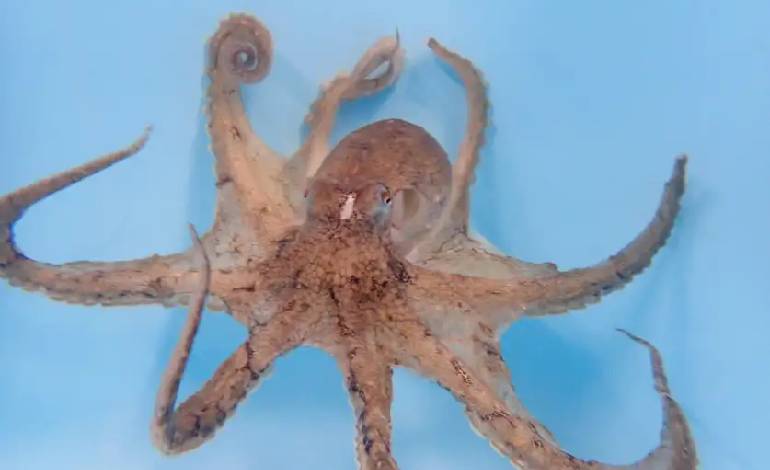
For a male octopus, there is one appendage it cannot afford to lose. This is its third right arm, which has a specialized role in sex. Therefore, they take extra care to protect it.
A new study led by Keijiro Haruki at Nagasaki University, Japan, has revealed the lengths octopuses will go to ensure their most precious arm stays safe from getting damaged or bitten off by a predator. Haruki was inspired to conduct research after gently touching the arm of a male octopus with his finger. “He would fight back hard if I touched one particular arm and pulled it back to his body,” Haruki says.
The third right arm — referred to as R3 — in the male octopus is called the hectocotylus and is anatomically distinct from the other seven. R3 has the task of delivering sperm from a penis that is so small that it cannot reach the female on its own. Male octopuses have one testicle, located in the mantle — the balloon-shaped part behind the head. Sperm are produced here and then stored in packages called spermatophores.
During mating, the male inserts the tip of the hectocotylus into the female. Before ejaculation, males coil the hectocotylus to form a tubular structure into which they push water to push the spermatophore from the penis into the female.
To find out how the octopus protects its third right arm, Haruki and his colleagues collected 32 male and 41 female Japanese dwarf octopuses Octopus parvus. Thirteen females lost an R3 arm, but only one of the males lost that arm. The team then conducted two experiments to compare how males and females use their R3.