Kingmakers’ of mango: Bees, flies and ants boost India’s famed fruit yields, study finds

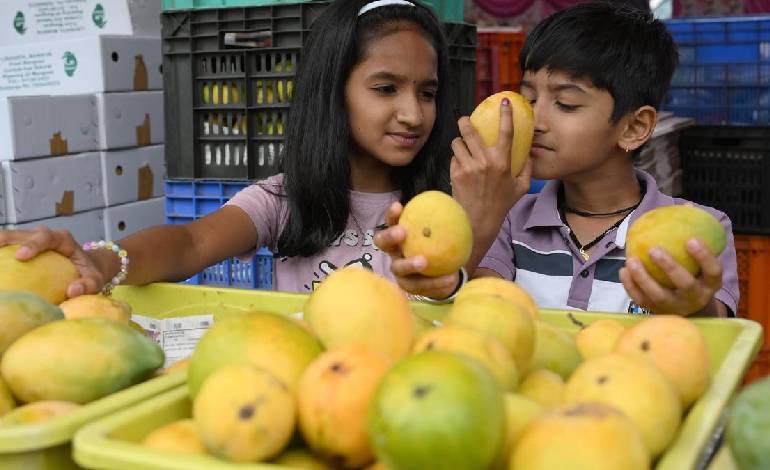
Bengaluru: The sweet scent of mango flowers isn’t just for us. It’s a call to a tiny army of pollinators that determines whether India’s king of fruits will bear a bumper crop or fail.
Researchers in Bengaluru, working with peers from Germany, tested that link by surveying Badami mango farms in the city’s urban and rural areas. When they blocked flying insects from visiting mango flowers, yields plummeted by as much as 350% compared to flowers left open to visitors.
Who are the ‘kingmakers’?
The study found the main flying pollinators include wild bees — dwarf honey bee (Apis florea), giant honey bee (Apis dorsata), and stingless bees (Tetragonula sp.) — along with hoverflies that mimic bees (Syrphus sp.), the common house fly (Musca domestica), and blow flies from the Calliphoridae family. thehindu.comCrawling insects matter too. Yields also dropped when ants were barred from flowers. Soubadra Devy, senior researcher at Ashoka Trust for Research in Ecology and the Environment and a study author, called ants “messy pollinators” and said they need further investigation as mango pollinators.
Implications for other varieties
While the work focused on Badami mangoes, Dr. Devy said she expects the pollinator community is likely similar for other Indian varieties because “floral traits, i.e. the flower structure, pollen, and nectar are likely to be very similar”.
Why it matters
India is the world’s largest mango producer, with over 2 million hectares under cultivation. The crop supports millions of smallholders. The findings underscore that conserving wild pollinators — not just honey bees — is critical for food security and farmer incomes.
The 2023 study highlights a simple truth: without these unsung insects, India’s famed mangoes would struggle to reach the baskets, markets, and export crates that carry them across the globe.