Kimberly-Clark tests desert plant hesperaloe as wood fiber alternative

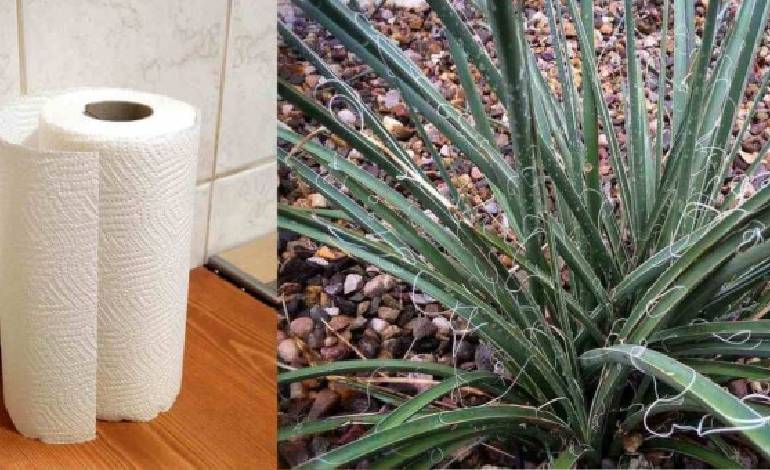
New York: Kimberly-Clark, the company behind Scott paper towels, Cottonelle toilet paper and Huggies diapers, says it may have found a sustainable alternative to wood fiber — a desert plant called hesperaloe.
Speaking to The Wall Street Journal, Craig Slavtcheff, the company’s chief R&D officer, called it a “Goldilocks discovery” and a “moonshot.” Commercial-scale testing is still underway.
Hesperaloe is a long-leaved succulent that thrives in arid environments. The company identified it after 20 years and $250 million in R&D, during which it tested 70 different substances, from wood straw to bamboo and hemp.“We tried to pulp everything,” said Jeff Melucci, Kimberly-Clark’s top strategy executive. “It was the hesperaloe, growing on an abandoned state test crop facility in Arizona, that caught his team’s eyes.”
The potential benefits go beyond replacing trees. The company says switching to hesperaloe could reduce reliance on deforestation and logging, lower costs, and help preserve forest ecosystems. Because it grows in dry regions, cultivating hesperaloe could also mean less water use in a warming climate and a tool to counter desertification. Fewer acres logged could additionally keep hundreds of thousands of tons of CO2 in the ground each year in major forestry countries like Canada and Sweden.
One key challenge is scale. Matching the efficiency of wood supply chains, built over decades, will take time. The company also has no estimate yet for the cost of a full crop-to-pulp supply chain, though early tests suggest it could be competitive with wood.
Kimberly-Clark has been searching for a wood fiber replacement for two decades with the goal of eventually removing logging from its supply chains.
The next step is a pilot facility in Yuma, Arizona, for cultivating and pulping hesperaloe. Results from that plant will determine whether the desert plant can move from lab to mass production.