IIT-Delhi study exposes flaws in key physics model using budget tech

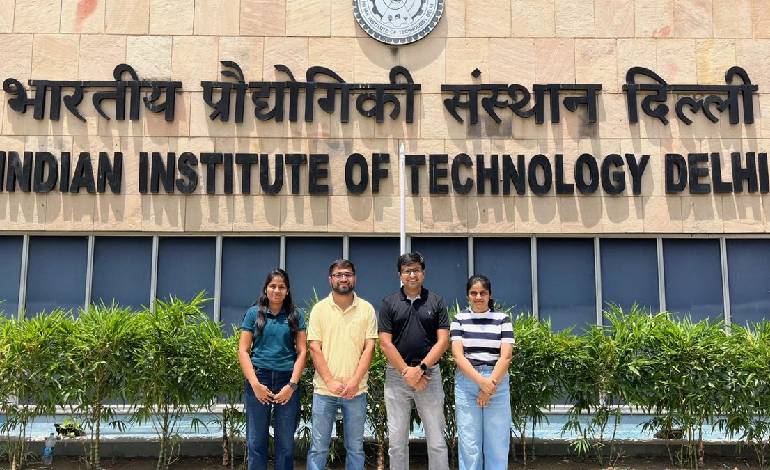
Chennai: Scientists at IIT-Delhi have used budget-friendly techniques to probe a long-standing physics debate: whether ruthenium dioxide exhibits a rare, unconventional type of magnetism called altermagnetism.
The study, published recently, found that the well-known Klemens model has “important limitations when applied to metals,” challenging assumptions used to design next-generation electronics and industrial catalysts.
When the IIT-Delhi team compared members of the rutile oxide family — minerals that share the same crystal structure — they observed a significant difference between insulators and metals that the model could not explain. While titanium dioxide is an insulator, ruthenium dioxide is a good conductor, despite structural similarities.
Understanding this discrepancy is considered a necessary precursor to engineering advanced electronic devices and more efficient catalysts, researchers said.
The work highlights how low-cost experimental setups can tackle fundamental questions in condensed matter physics, particularly around emerging magnetic phases like altermagnetism that could enable novel spintronic applications.