California creek restoration helps salmon grow twice as fast, early data shows

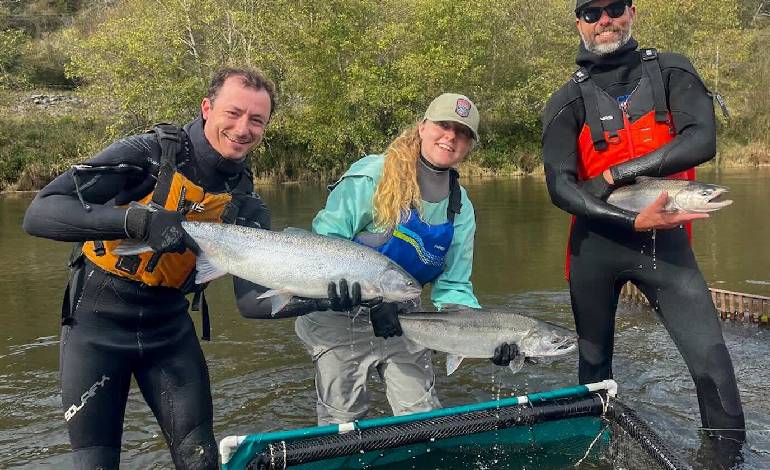
Along California’s redwood coast, conservationists have spent more than a decade giving a damaged creek something simple but critical: room to behave like a creek again. The effort at Prairie Creek, one of the last refuges for three threatened salmon species — California Coastal Chinook, Northern California steelhead, and coho salmon — is now showing measurable results. Coho populations across the region declined by 90% in the last century.
The major restoration project, led by NOAA Fisheries with a broad coalition including Cal Poly Humboldt, transformed a former lumber mill into wetlands and a thriving floodplain ecosystem. By reconnecting the creek to its floodplain and restoring wetlands, ponds, side channels, plantings, and areas of slow-moving water, the team recreated the complex habitats young salmon need to feed and shelter. Historically, human activity had altered portions of the creek and left juvenile fish with far fewer options.
The results, tracked through years of monitoring, are striking. Researchers tagged individual fish with tiny microchips to follow their growth, movements, and survival. Juvenile coho using the restored habitat are growing faster than those remaining in the main creek channel. “In certain sites and certain years, the fish using restoration sites grew up to twice as fast,” said Carter Adamson, a fish biologist with the Pacific States Marine Fisheries Commission who studied growth at Prairie Creek. He explained that faster growth has consequences far beyond the creek. Young salmon that grow quickly are more likely to survive their migration to the ocean, more likely to survive years at sea, and more likely to return as adults to their home stream to reproduce.
Early survival data supports that link. NOAA reports that 2.6% of juvenile coho from the 2023 cohort survived their time in the ocean and returned as adults to spawn, compared with previous survival estimates of about 1%.
Monitoring at Prairie Creek will continue through at least 2028 to account for changing ocean conditions. The extended timeline will help scientists confirm whether bigger, faster-growing juveniles ultimately translate into more adult salmon returning home.
So far, the findings match what biologists expected. Give young salmon slow water, abundant food, and places to hide, and they don’t merely occupy the restored habitat — they thrive there. The Prairie Creek work is part of a larger push to recover West Coast salmon, including recent returns to historic spawning grounds in the upper Klamath River following the nation’s largest dam removal project.