From corporate law to community work: Kolkata lawyer’s NGO expands to 35 cities

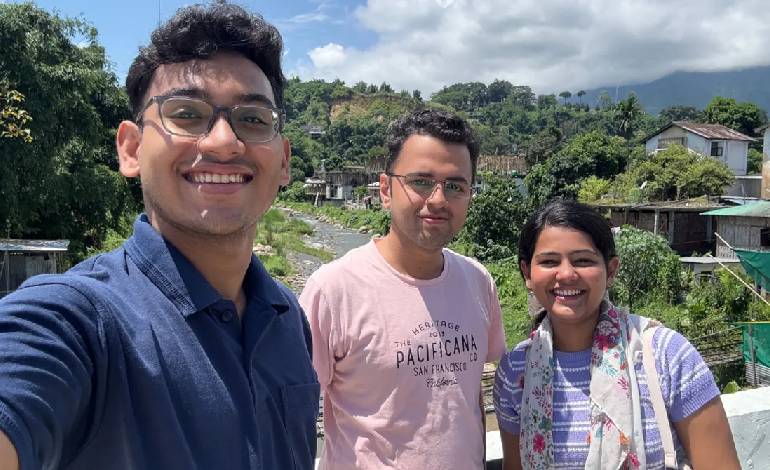
Kolkata: On a humid morning in Kolkata, 26-year-old Manav Sony walks across a rough patch of land, sleeves rolled up and hands muddy, as workers press saplings into the soil. The site will soon become a dense green patch using the Miyawaki method of afforestation.
Two years ago, Sony was a corporate lawyer in the city’s real estate sector. Today, he leads Funsmart Knowledge Solution Foundation, a grassroots organisation now operating across 35 cities with over 400 volunteers.
“A lot of people think social work is only about charity,” Sony says. “But for me, it is about solving problems in a smart and practical way.”
From law to grassroots
Born and raised in Kolkata, Sony volunteered in environmental clubs during school but chose law for its stability. After completing his BBA and LLB, he joined the real estate sector as a corporate lawyer.
Even while working long hours, he spent weekends teaching in government schools, organizing food drives, and sponsoring education for underprivileged students. A turning point came when a young girl whose education he supported secured admission to a good school. “That moment kept repeating in my mind,” he recalls. “I started asking myself — if helping even one person can create this much change, then why am I limiting myself?”
In 2024, he registered Funsmart Knowledge Solution Foundation. The name reflects his goal: “fun, innovative ways” to create “smart solutions for real-world problems.”
Early struggles
Sony initially juggled his legal job and the NGO. In 2025, after pitching early work to a municipal corporation official, the organisation received its first small funding support. He resigned from his corporate job a month later.
The transition was not easy. “There were months with barely any projects, operational setbacks, and times when expenses exceeded budgets,” he says. At one point, stress led to illness. His family stepped in to help stabilize the organisation.
Growth and impact
Funsmart now works across education, environment, waste management, women’s health, and disability inclusion. The organisation has completed over 50 projects and reached more than 3.8 lakh people, Sony said.
One of its first large projects involved planting over 4,000 trees using the Miyawaki method in collaboration with corporate partners, 755 kilometres from Kolkata. The project created livelihoods for around 30 underprivileged individuals who now maintain the site.
Dinesh Mohanti, 48, a former school gardener, joined the plantation initiative for better income. “In society, people often do not respect work like ours,” he says. “But for the first time, someone valued what I do. That made me feel respected.”
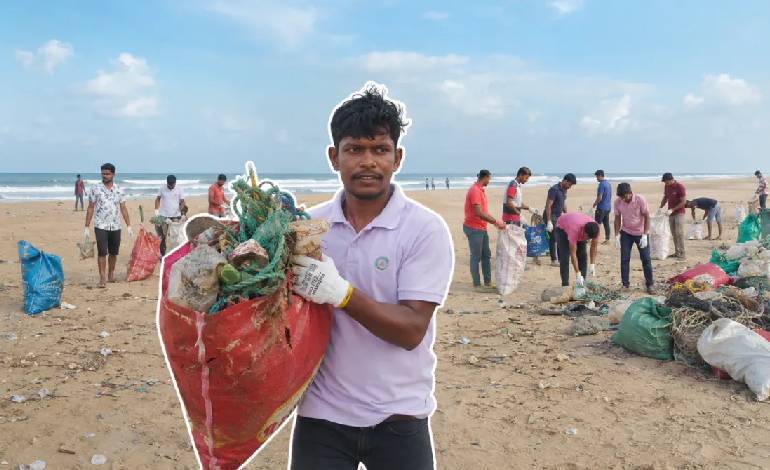
During Durga Puja, the NGO collected more than 12 tonnes of plastic waste through kiosks near pandals. The waste was later recycled into furniture for children. “Even when bins were placed right beside people, many still threw plastic on the roads,” said team member Debayan Bhattashali, 21. “We realised how deeply civic habits need to change.”
The organisation also runs career guidance and skill-building workshops. Anjani Singh, 19, from Dhanbad, received partial college fee support and attended communication and financial literacy sessions. “Before this, most of my energy went into worrying about money,” she says. “Now I can focus on improving myself.”
‘Social work is leadership’
Sony says the sector comes with uncertainty — months without funding, failed projects, team conflicts. “But if your purpose is clear, you keep moving.”
He hopes more young people enter the social impact space. “A lot of people still misunderstand NGO work,” he says. “But social work is not a weakness. It is leadership, problem-solving, and community building.”
As the sun sets over the plantation site, rows of young saplings sway in the breeze — small for now, but growing, like the movement Sony and his team are building.