IIT BHU’s precision hit: New compound targets breast cancer cells, spares healthy tissue

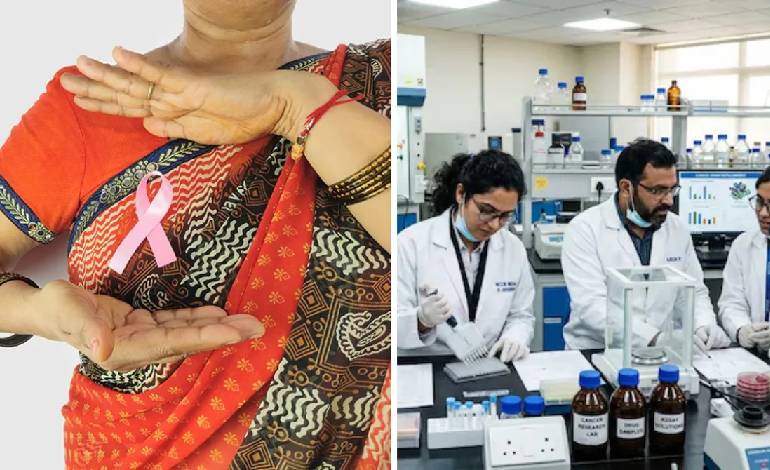
Chemotherapy has been cancer treatment’s backbone for decades, but it damages healthy cells too — causing hair loss, fatigue, nausea and weakened immunity. Researchers at IIT BHU, Varanasi, say a new compound could offer a more precise alternative.
A team led by Prof. Vikas Kumar Dubey from the Department of Biochemical Engineering, with scholars Shivkumar and Raj Bahadur Singh, has identified a chemical compound that selectively targets breast cancer cells in lab conditions. It restricts growth and pushes them toward self-destruction without affecting healthy tissue.
The team spent 1.5 years screening millions of compounds in the ZINC database, a public repository used in drug discovery. They shortlisted ZINC-000002107582. Lab tests on breast cancer cells gave encouraging results.
The compound works in two ways. First, it interferes with proteins UVRAG and BAX that help cancer cells survive and multiply by securing nutrients. By breaking their binding, it starves the cells, stalling growth until they die. Second, it increases Reactive Oxygen Species (ROS) inside cancer cells, creating stress that triggers self-destruction. The findings were published in the American Chemical Society’s Biochemistry journal, and a patent application has been filed. Prof. Dubey said unlike conventional chemotherapy, the compound acts specifically on cancer cells, which could make future treatments more effective and less distressing.
Breast cancer is the most commonly diagnosed cancer among Indian women. Cases rose from 2,00,218 in 2019 to 2,21,579 in 2023, with deaths up from 74,481 to 82,429, as per data cited in the study. Late-stage detection remains a challenge.
Caveat: The compound has so far been tested only on breast cancer cells in the lab. It must undergo animal testing and human clinical trials before it can become a medicine. The gap between lab results and a viable drug is long and rigorous. For a disease that claims tens of thousands of lives in India yearly, a compound that attacks cancer without collateral damage is a development worth watching.