World wildlife wonder secured: RSPB takes custody of Bass Rock

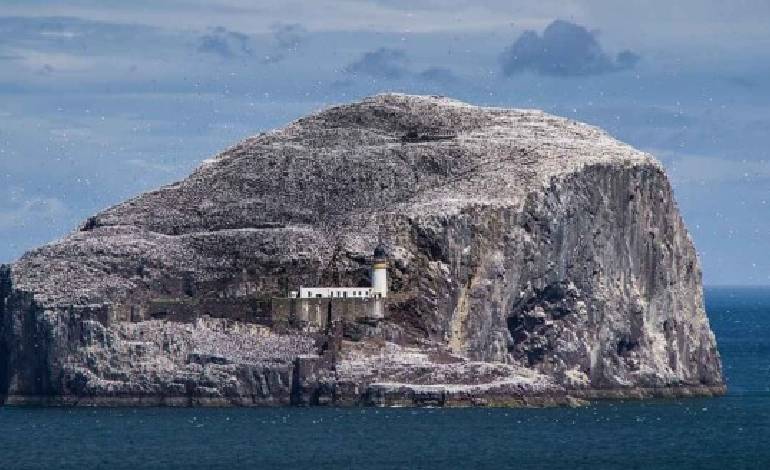
A globally important seabird colony has been sold to the Royal Society for the Protection of Birds to ensure 100,000 gannets and 10,000 puffins will benefit from top-level conservation management. Bass Rock and neighboring uninhabited Craigleith Island in the Firth of Forth have been transferred from private ownership to the RSPB.
Owned by the Scottish noble Dalrymple family for 320 years, Bass Rock and Craigleith have long been famous worldwide for their epic gannet colony. The birds nest among the ruins of a 14th century castle and a 17th century prison nicknamed “Scotland’s Alcatraz”. The ‘Rock’ has inspired songs and literature for generations. Sir David Attenborough described it as one of the “12 wildlife wonders of the world”.
The Dalrymples have decided to end their stewardship now, citing rising numbers of Scottish seabird fatalities. Sir Hew Dalrymple said conservationists would be better placed to protect the colony with unfettered management of the islands.
“I made the decision to do this because of the risk these birds are now facing,” Sir Dalrymple told reporters from the island. “I thought an organization like the RSPB would be better equipped to protect the islands and their wildlife than a private individual. Hence, we have been in discussions and I am glad to say, although with some emotional regret, they are now custodians of these two islands.”
The family had long collaborated with the Scottish Seabird Centre on conservation measures at Bass Rock. The Scotsman credited that partnership with helping the island’s puffin colony grow to five-figure numbers and with eliminating an invasive tree species.
With RSPB now in charge, the 100,000 gannets that make Bass Rock home to the world’s largest colony, along with the growing puffin population, will come under dedicated protection as seabird populations face mounting pressures across Scotland.