Micro-robots help mice walk again after spinal cord severed, ETH Zurich finds

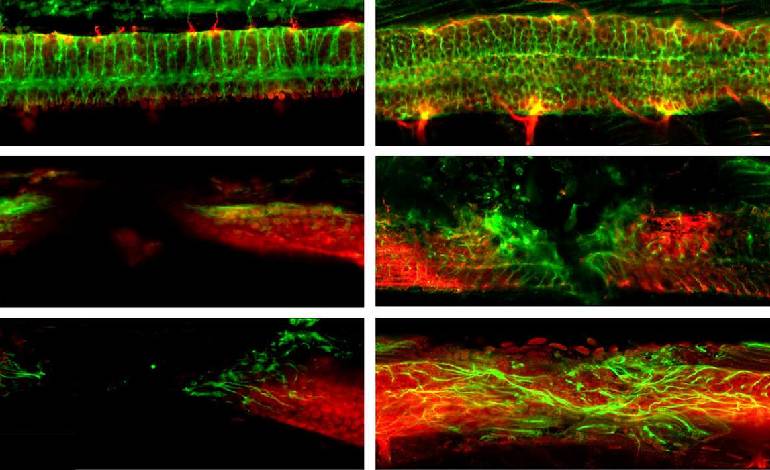
In an early demonstration of a potentially revolutionary technology, biotech engineers at ETH Zurich have used micro-sized robots and stem cells to restore normal movement in mice whose spinal cords were entirely severed. The technology, published in Nature Materials, was also tested in zebrafish. Researchers say it offers multiple advantages over existing nerve repair methods.
Spinal cord injuries often have devastating consequences because nerve cells rarely regenerate naturally and scarring blocks nerve fiber regrowth. Current implantable electrode stimulation can restore some movement by injecting stem cells and using electrical pulses. But it requires placing electrodes in an extremely sensitive area and transplanted cells do not always survive or integrate properly.
ETH Zurich’s team is pursuing a new approach. It combines therapeutic stem cells with nanoparticles that can be guided magnetically to the injury site and then stimulate the cells to accelerate repair.
The process begins with a patient’s skin sample, which is converted into induced pluripotent stem cells. These are then turned into neuro progenitor cells, NPCs, capable of becoming nerve cells. Researchers also create nanoparticles with an inner layer that responds to magnetic fields and an outer layer that converts that response into electrical signals.
These components are combined in a 1-square-centimeter culture medium developed by Professor Salvador Pané i Vidal of ETH Zurich’s Multi-Scale Robotics Lab to produce “NPCbots”. In about 30 minutes the cells and nanoparticles combine. Once several million are extracted, the therapy is ready for use.
The NPCbots were first tested on zebrafish, which can naturally repair their spinal cord. The fish showed quick, substantial and lasting improvements in movement. Researchers then moved to mice, a model more relevant to human use.
In the mouse model, results were very promising. After 28 days, nerve cells at each end of the severed spinal column had reconnected. During this period, treated mice showed increasingly normal movement patterns. Their gait, stride length, coordination and exploratory behavior improved significantly. The treatment was well tolerated by the animals, with no evidence of adverse effects or immune reactions.
Researchers say the next step is continued animal testing to check for side effects before any human trials. They expect the nanoparticles to be stable and minimally reactive thanks to a coating of barium-titanate, and believe they may eventually dissolve in muscle tissue. The team also wants to confirm whether the particles are excreted from the body.
If further studies confirm safety and efficacy, the technology could offer a new path for treating spinal cord injuries without the need for implanted electrodes.