From loss to recovery: Mangrove forests reverse 40-year decline

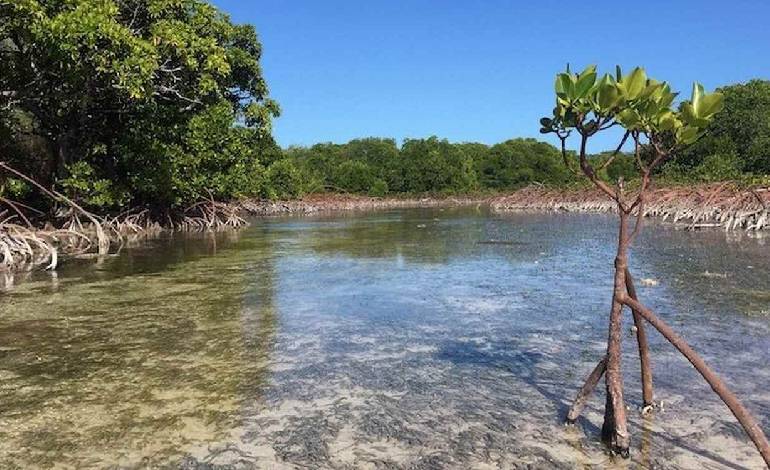
Mangrove forests are making a comeback. A new “landmark” study has found that destruction has not only stopped in the last 20 years, but reversed. The world now has more mangrove cover than it did at the turn of the century. The degree of age and robustness among intact forests, known as “closed canopy” mangroves, has also increased far more than overall area.
The findings were published in Science by a team from Tulane University. Mangrove forests are among the planet’s best environmental stewards. They absorb up to 5 times more carbon than terrestrial trees. They provide exceptional filtering of pollutants and excess nutrients. Their tangled roots also create nursery sanctuaries where fish, invertebrates, and crustaceans can grow and feed beyond the reach of predators.
They provide unrivaled defense against storm surges and tsunamis. Humanity understood this after the 2004 Indian Ocean tsunami. Countries in South and Southeast Asia were subjected to a real-world A/B test. Nations that had clear-cut mangroves suffered far more damage than those that still had them.
In Indonesia, this played out island by island. The result was clear. “Some islands were covered by mangroves and after the tsunami those islands were protected very well, so that increased public awareness about the importance of protecting mangroves,” lead author Dr. Zhen Zhang told the BBC.
Mangroves declined through much of the late 20th century. Between the 1980s and 2010, the world lost nearly 1,120 square miles of them. But the last 16 years have told a different story. Gains have outpaced losses. By 2023, mangrove areas had rebounded. Over the entire 4-decade period, there was only about a 1% net decline — a much smaller loss than previously estimated.
“What we’re seeing now is a real shift. Mangroves are now showing a net increase globally, and the rate of degradation is slowing,” said Daniel Friess, Cochran Family Professor of Earth and Environmental Sciences at Tulane and director of The Mangrove Lab. “While some mangroves are still being lost, this could make them a rare conservation success story and an important source of optimism for climate action.”
The recovery suggests conservation programs, community protection, and replanting efforts are working. For a biome long seen as a climate casualty, mangroves may now be one of the few clear wins in global conservation.