From dropout to reader: Kashmir’s Aragam village rewrites education with community books

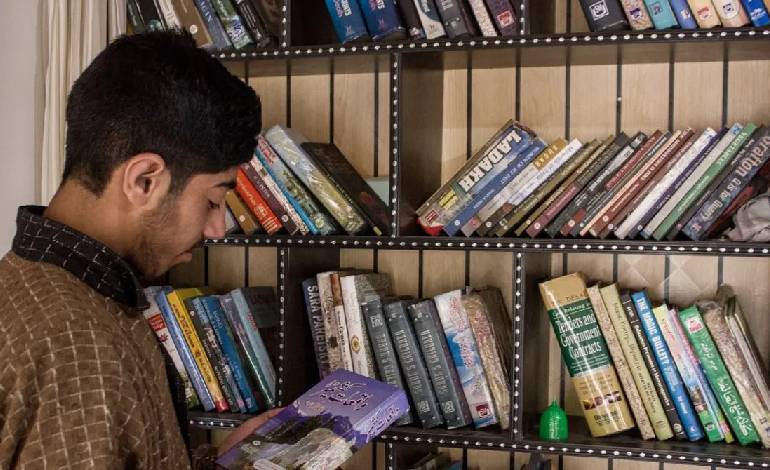
In Aragam village, Bandipora district, 16-year-old Irfan Ahmad now reads by a dim bulb in his mud-plastered home. He dropped out after Class 6 as his family could not afford school and books were scarce near Wular Lake.
Today he reads Kashmiri history, Urdu fiction and stories about Wular’s natural world. After each book, he narrates it to his younger siblings. “Earlier, I felt my studies had ended forever. Now, when I read, it feels like I am still learning. I want to continue my education and prepare for competitive exams someday,” he says.
Aragam long faced limited schools and study material. The change began with a 2014 proposal by Pune-based Sarhad NGO to create a “book village” in Jammu & Kashmir. After consulting Bandipora administration and surveying areas around Wular Lake, Aragam was chosen for its infrastructure and residents’ willingness.
Instead of one central library, each participating home now keeps books on a specific subject — fiction, history, religion, children’s literature, or competitive exams. Villagers manage circulation themselves. Students borrow from different homes and return books after reading. Locals call it a “community library without walls”.
Books were first placed in about 10 homes with villagers’ consent. The project has since expanded. Thousands of books donated by publishers and organisations are now spread across dozens of households.
Residents say books at home have increased reading among children and teens. Hundreds of students access the collections, especially those preparing for board exams and entrance tests who cannot afford costly material. Teachers report better school attendance and interest in education. Several students have started appearing for higher secondary and competitive exams with reference books that were earlier unavailable.
“I had to leave school after Class 6,” says 19-year-old Shahid. “Now, I read at home and tell my parents what I learn. It feels like I am going to school again.”“Earlier, our children had no facilities — no books, no guidance,” says parent Mushtaq Ahmad. “Education was a distant dream. Now, books are in our homes, and children read instead of wandering.”
The books have also revived Aragam’s storytelling tradition. Evenings now include shared reading, with children reading from books and narrating stories to elders. “Earlier, we told stories from memory,” says resident Iqbal Ahmad. “Now our children read from books and narrate them to us. It has brought back storytelling in a new way.”