How Wallace and Bates’ Amazon voyage changed natural history forever

On April 26, 1848, English naturalists Alfred Wallace and Henry Bates set sail from England for the Amazon. Their expeditions would vary in length, but both returned with insights that reshaped how we study the natural world.
Natural history — the interdisciplinary study of living organisms — covers the entire spectrum of life: plants, animals, fungi, even microorganisms. It focuses on life cycles, behaviors, and relationships of organisms in their natural environment, serving as a bridge between scientific study and appreciation of nature.
Unlike lab experiments, natural history leans on direct observation and classification. Wallace and Bates exemplified this. In the Amazon, they documented species with meticulous detail, collecting specimens and noting behaviors in context.
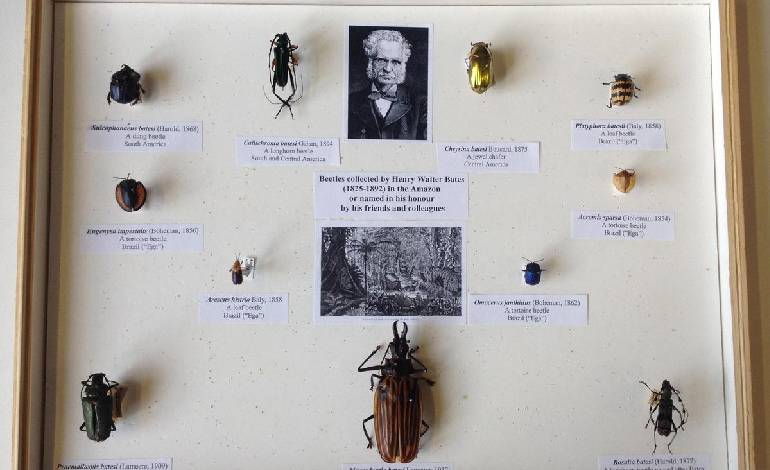
Bates spent 11 years in the rainforest, studying insect mimicry. His work on beetles, still displayed in collections today, revealed how some species evolve to resemble others for protection — now called Batesian mimicry. Wallace, who spent four years there and later eight years in the Malay Archipelago, gathered evidence that led him to independently conceive the theory of evolution by natural selection.
Together, their observational rigor turned exploration into science. By prioritizing what they saw over what they assumed, Wallace and Bates helped move natural history from cataloging curiosities to uncovering the mechanisms of life.