Raghu Rai didn’t just photograph India, he redefined how it’s seen

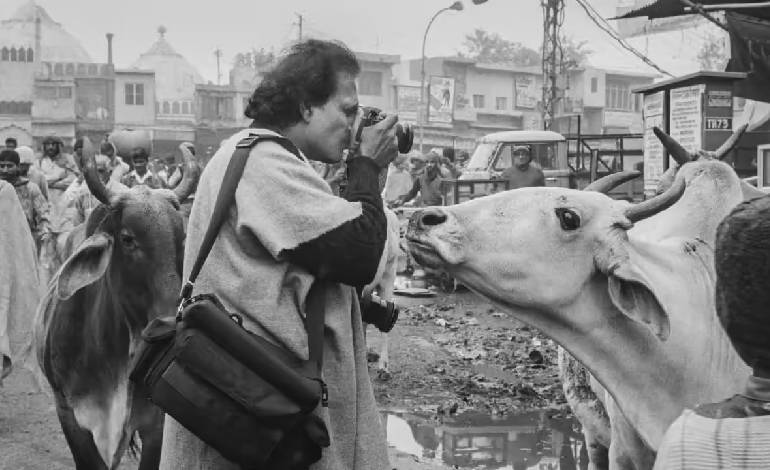
New Delhi: Veteran photographer Raghu Rai didn’t just document India — he invented a way of seeing it, using a wide-angle lens and a cinematic eye that captured the country’s contradictions decades before visual language caught up.
The audacity of Rai’s framing, the tension he choreographed at the edges, added a cinematic aside long before cinema adopted that grammar. In his own words, photography “for me, is darshan… you have to make yourself available mentally, physically, spiritually to the moment.”
Rai came to prominence shooting for The Statesman and later became a defining voice at India Today, where his images shaped how a generation understood the nation. His work spans some of India’s most pivotal people and events. He produced intimate portraits of Indira Gandhi that cut past officialdom, and his documentation of Mother Teresa’s work in Kolkata brought quiet dignity to global audiences. His lens followed faith and community in landmark studies like The Sikhs, and he turned to the country’s great cities with Delhi: A Portrait, Calcutta, and Bombay, layering urban chaos with human detail.
He approached monuments as living subjects, most notably in his meditations on the Taj Mahal, and captured mass spirituality at the Kumbh Mela with a scale that felt both epic and personal. His coverage of the 1984 Bhopal Gas Tragedy, including the haunting image of a child being buried, became one of the defining visual testimonies of the disaster. Across decades he compiled sweeping surveys of the nation in volumes simply titled India, tracing its landscapes, rituals, and political shifts.
The first Indian photographer to join Magnum Photos, Rai has exhibited at the Bibliothèque nationale de France, the National Gallery of Modern Art in Delhi, and in major retrospectives worldwide. For photographers who followed, his influence arrived early. “I came to Raghu Rai before I came to photography,” writes Rohit Chawla. “As an 18-year-old shooting for a city magazine, more to fund a relationship than any artistic calling, photography was a means to an end, until his images began to intrude. They didn’t just influence what I shot, they altered what I thought a photograph could hold.”