World’s first rewilded sharks thrive in Indonesia after captive-breeding breakthrough

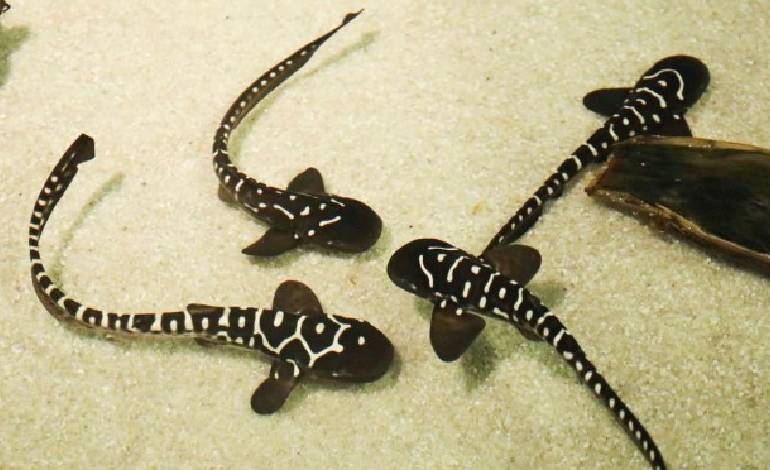
Raja Ampat, Indonesia: Out in the wild waters of Indonesia, zebra sharks had become extremely rare. Overhunted for their fins, the striped bottom-dwellers were on the brink of extinction, with just 20 adult sharks estimated to remain in Raja Ampat in 2019.
Three years after foundational work began, an international consortium of 60 aquariums in 15 countries has achieved what is being called the world’s first rewilding of sharks.
The project, named ReShark, banded together to create a captive-breeding-and-release program — an approach typically reserved for mammals and other terrestrial species. The zebra shark, also known as the Indo-Pacific leopard shark, is ideally suited for it since it lays eggs.
Since the program began, 82 pups reared in captivity have been transported to Raja Ampat and released into a 46,000 square-kilometer shark and manta ray sanctuary.
The pups are satellite-tagged, providing proof-of-concept data. According to the team, the sharks are foraging well and staying within the sanctuary boundaries, offering protection from illegal fishing that led to the species being listed as “Endangered” by the IUCN.”
Most conservation activities for sharks usually revolve around either setting up marine protected areas or doing fisheries management. In our case, our niche is we’re doing active recovery,” said Mark Erdmann, executive director of ReShark.
The program began when Erdmann visited the SEA Aquarium in Singapore and learned their zebra sharks were producing more viable eggs than the tanks could handle.
Now dozens of aquariums ship viable eggs in special containers to ReShark’s two nurseries in Raja Ampat and Phuket, Thailand. There, eggs hatch and baby sharks are reared in protected nurseries by trained aquatic animal husbandry specialists known as “shark nannies.”
At 1 meter in length, the animals are released into the sanctuary, where they will need between 5 and 12 years to reach sexual maturity. The true test — whether they will reproduce in the wild — is expected by 2028 at the earliest.
ReShark is also working with local Thai and Indonesian fishermen to highlight the shark’s ecological importance. Since 43% of sharks lay eggs, the team says success could make the model replicable for other shark species.