The crane on her desk hid a message for 10 years

Seattle: A story of quiet kindness from Japan, immortalized in an origami crane, has found new life through Seattle’s NPR station KUOW and its “My Unsung Hero” series.
It begins with 7-year-old Rika Matsuda and a new bike. The bike was faster than her old one, and riding in a park she headed straight for a wall before realizing the brakes didn’t work. She crashed, fell, and hurt her foot which began to turn purple.
A man approached her. Tall, strong, in a suit, giving off an air of importance, Matsuda recalled in Japanese to a translator. She was nervous at first.”But when he said, ‘Are you OK?’ I knew from his kind and gentle voice that he was a very nice man,” she said.
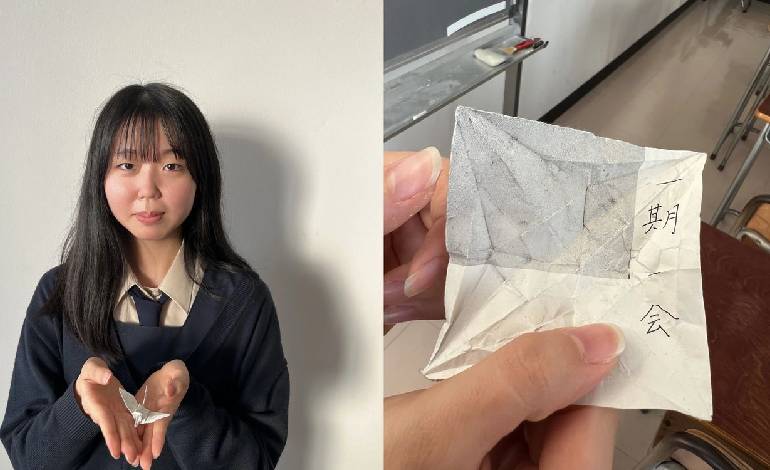
The man helped her to her feet, took her to a water fountain to wash the cut, and lent her his phone to call her grandfather. While they waited, he took out a white piece of paper and showed her how to fold an origami crane.”He was really good at folding origami, and he taught me the right way to make a clean and beautiful crane,” she said. “Maybe he wanted me to think about the paper instead of my foot.”When her grandfather arrived, the man helped get the bike and Matsuda home. Before leaving, he handed her the crane without a word and disappeared.
The crane stayed on her desk for years, a reminder of his kindness.A decade later, Matsuda was in high school English class. Her teacher, Benjamin Johnson, used KUOW’s My Unsung Hero as a workshop, asking students to write about an encounter with a Good Samaritan. Matsuda remembered the crane.After class, she rushed home and carefully unfolded it. Inside was a message – two characters forming a well-known Japanese idiom.”We should treasure each time we cross paths with someone because it might never happen again,” Matsuda translated. More simply: “cherish the moment.””Then I realized even more how kind and how nice of a man he was,” she said.