Sabre-toothed cats could crunch through bone, new study finds

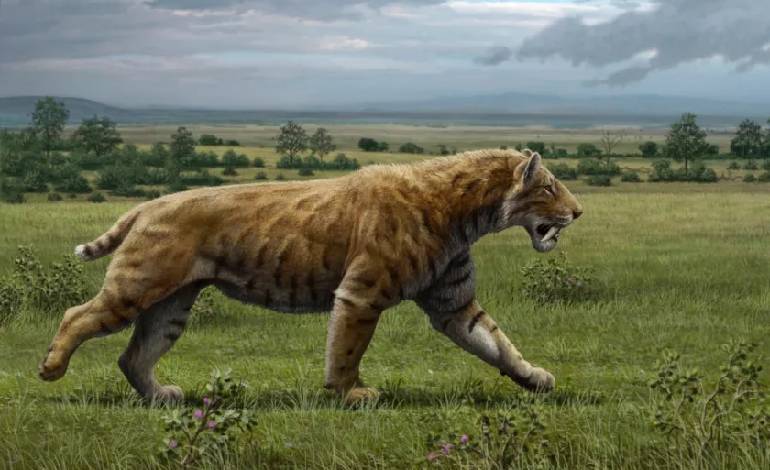
Madrid: Sabre-toothed cats like Smilodon were long thought to have fragile teeth that could only slice flesh. New research suggests they were also capable of crunching through bone.
A team led by Yolanda Fernandez-Jalvo at the Museum of Natural Sciences in Madrid analyzed fossil bones from Salto de Piedra, Argentina, about 350 km south of Buenos Aires. The site dates from 22,200 to 13,300 years ago and contains remains of giant armadillos, giant sloths, mastodons and the sabre-toothed cat Smilodon populator.
For decades, scientists assumed the cats’ extra-long canines — some over 25 cm — were a trade-off: great for puncturing flesh but too weak to hit bone.
To test that, researchers looked for tooth marks on megafauna bones. They measured punctures and grooves with digital calipers and matched them to known Smilodon teeth.
The results show the cats’ canines did penetrate and process cortical bone. The mark patterns provide direct evidence that Smilodon could bite through bone, refuting the idea that their teeth were functionally fragile.
“Personally, I always found that interpretation difficult to accept,” said Federico Agnolín of the Argentine Museum of Natural Sciences, who was not involved in the study. “It seemed unlikely that such a large predator would evolve enormous canines only to avoid using them”.
The findings reshape how we view Smilodon as a top predator during the Pleistocene. Rather than only slicing prey, they may have used their powerful bite to process carcasses more thoroughly, similar to modern big cats.