Padma Shri Akhone Asgar Ali Basharat keeps Balti language alive from Kargil village

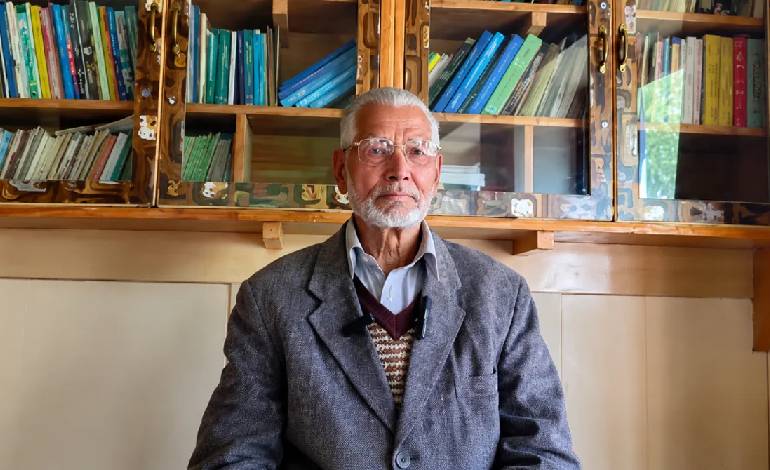
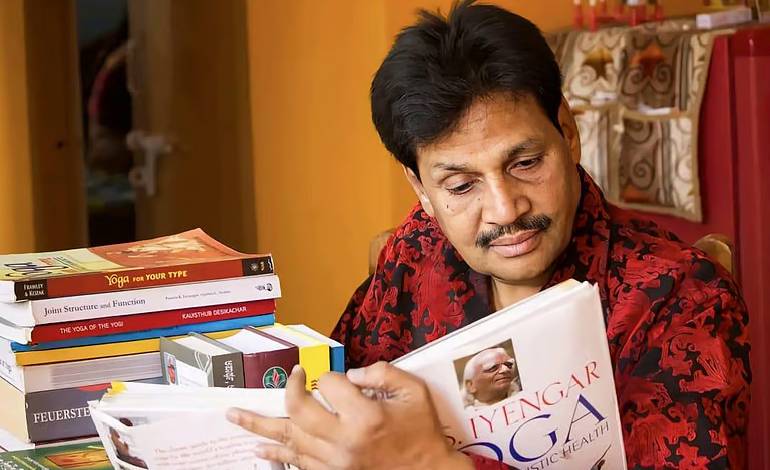
Kargil: In Karkitchoo village, 13 km from Kargil town, lives a self-taught writer who never sat in a formal classroom yet holds an honorary doctorate. Akhone Asgar Ali Basharat, now in his seventies, has spent five decades documenting and promoting Balti — a language UNESCO classifies as vulnerable and spoken on both sides of the Line of Control.
From madrassa to Padma Shri
Basharat’s education began at a madrassa his father established at home in 1972, where students learned Balti, Persian, and Arabic. That early grounding gave him fluency across scripts and literary traditions, shaping his later work as a compiler and author.
He began writing poetry around 1980, starting with Naat and Manqabat — devotional forms. His writing then expanded to cover Balti geography, oral histories, and the community divided by the border. Over 50 years he has compiled three books including Guldasta-e-Najaat, Muhzinul Bukaa, and Raah-e-Behasht, and authored two poetry collections, Guldastae Basharat and Bazme Basharat.
The work is driven by urgency. Census data show Balti speakers declined 31.31% between 2001 and 2011. With the community split across India and Pakistan, cultural exchange that could sustain the language remains restricted.
Bringing Balti into classrooms and homes
Basharat became a regular voice on All India Radio Kargil after it launched in 1999, presenting programs like Mehfil-e-Mushaira that brought Balti poetry into homes across J&K. He also helped formalize the language in education. Between 2016 and 2017 he served on the JKBOSE committee that prepared the Balti syllabus, and supervised compilation of the basic Balti textbook for NCERT.
In July 2024, the University of Ladakh conferred an honorary doctorate on him at its inaugural convocation for contributions to regional cultural heritage. In 2022 he received the Padma Shri, India’s fourth-highest civilian award for literature and education — the first time it went to a Balti writer.
Struggle continues despite recognition
Basharat says he never expected the Padma Shri call. But state honors haven’t solved practical challenges. A year after the award, he was still seeking funds to publish his latest Balti anthology, which highlights facets of a culture divided by the border.“What sustains him is what started him: his father’s influence, and the conviction that a language is not just a tool of communication but the vessel of everything a people know about themselves,” he says. The fear of cultural erosion, he adds, keeps him writing.
Balti now has few institutional backers. While India’s palm-leaf manuscripts have the National Mission for Manuscripts, Basharat works from his Kargil village hoping for support to print the next book and keep the language from fading.