Nightjar males clack wing bones to attract mates in the dark

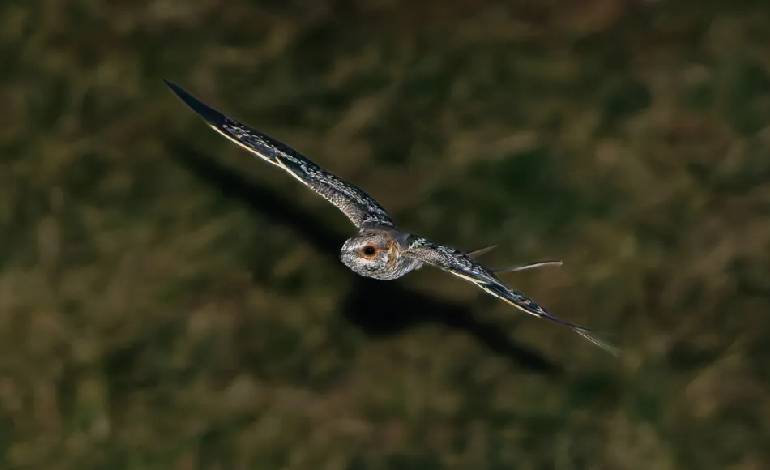
Argentina: In the moonlit forests of northern Argentina, male scissor-tailed nightjars make a sharp cracking sound that puzzled scientists for years. New research shows they create it by clacking the bones in their wings together.
Researchers Juan Ignacio Areta and Christopher Clark used high-speed infrared cameras to film males at night near Salta. The footage, published in May in the Journal of Avian Biology, caught the exact move. The bird leaps, rotates both wings above its back, and strikes the radius bones — the bird equivalent of forearm bones — at the top of the jump. The collision produces a loud, impulsive “tk” sound.
The discovery settles decades of speculation. Ornithologists had heard the snapping sounds since the 1920s but didn’t know the source. Some thought it was feathers slapping or air forced between wings. The video proves it’s bone on bone.
Male scissor-tailed nightjars perform this wing-clapping during courtship, usually between 3 and 4 a.m. near a full moon when the forest is quiet. They’re nocturnal, insect-eating birds related to hummingbirds. Males are recognizable by their long forked tails that spread like scissors during displays.
The behavior puts nightjars in a rare group of birds that make “sonations” — mechanical sounds using wings, feathers or bones instead of vocal cords. Clark calls it “a hidden corner of biodiversity” because most research focuses on birdsong.
Scientists checked museum specimens and found no special wrist structures. The birds may not need physical adaptations to do this, similar to how humans can clap without unique bones.
One mystery remains. Males also make a deeper thudding sound during takeoffs and chases. That sound doesn’t come from wing collisions. Researchers think it might be caused by feathers bending under air pressure, but the exact mechanism is still unknown.