Nagaland farmers beat water scarcity with 500-year-old system that turns hills into lifelines

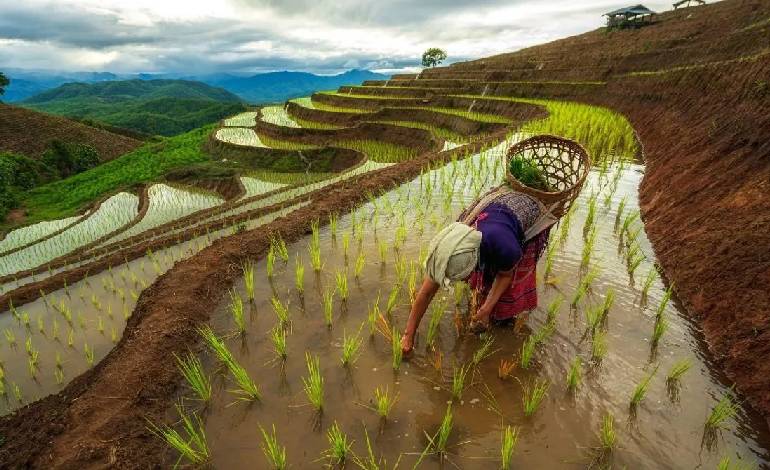
Kikruma, Phek: In the misty hills of Nagaland, Naga farmers have sustained a 500-year-old answer to modern crises — the Zabo farming system. A community-led method that harvests rainwater, integrates forests, livestock, and crops, it is helping tackle water scarcity and soil erosion in hilly terrain.
In Kikruma village of Phek district, water trickles down forested slopes, collecting in hand-dug ponds before flowing to terraced fields below. Every drop is guided, every layer of land has a role, and nothing is left to chance.
Here, farming is not imposed on nature; it follows its rhythm.The Zabo system — also called Ruza in some areas — combines forest conservation at the top of the hill, water-harvesting ponds in the middle, and terraced paddy fields below. Livestock sheds are built near the ponds, and manure from cattle flows into the fields as natural fertilizer. Forests are protected to ensure steady runoff, while the ponds store rainwater for irrigation during dry spells.
The result: water conservation, soil protection, and year-round food security, all without chemical inputs.In an era of climate uncertainty, this centuries-old tribal practice is doing exactly what the world now strives for — conserving water, preventing soil erosion, and growing food sustainably.
For the farmers of Kikruma, Zabo is more than a technique. It’s a system where forests, farms, livestock, and people work together, showing that sustainability can be inherited, not just invented.