Munnar’s neelakurinji blooms early on Chokramudi

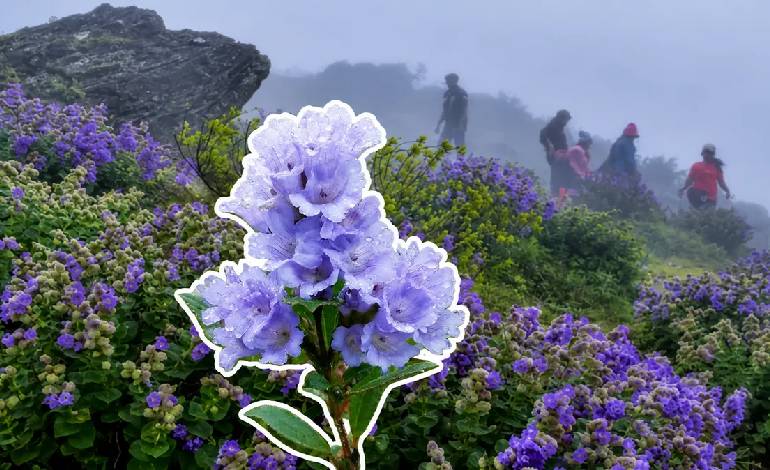
Munnar’s hills turned deep blue-purple in 2018, and ever since, one number has been associated with the region’s next neelakurinji bloom: 2030.
That is true for the famous flowers inside Eravikulam National Park, the population that drew visitors and photographers eight years ago.
But this July, without the same fanfare, a different stretch of neelakurinji shrubs on the ridges around Chokramudi and Mattupetty began flowering — four years earlier than many people expected.
It is not an early version of the 2030 bloom. It is a different population, following its own 12-year cycle. And its time has come.
Neelakurinji (Strobilanthes kunthiana) is famous for an unusual life cycle. The plant flowers just once before dying. Its seeds then remain in the soil and grow into the next generation, which blooms about 12 years later.
The confusion comes from the fact that different populations grow across the shola grasslands of the Western Ghats. They do not all flower in the same year.
The Mattupetty-Kannimala population bloomed in 1990, 2002 and 2014, putting it on a 2026 cycle. The Chokramudi-Kodaikanal-Poondi population also flowered in 2014 and is now blooming again.
Meanwhile, the better-known population inside Eravikulam National Park, which flowered spectacularly in 2018, is on a different cycle and is expected to bloom again in 2030.
So, both years are correct — 2026 for some populations and 2030 for another.Chokramudi is currently at the centre of the flowering, with patches already visible across its slopes. Forest officials expect the bloom to spread through September and October to areas including Edalimedu near Mattupetty, Sevenmala, Gundamala and the higher stretches of Meesapulimala.
Locals had already spotted small clusters in 2025. Tribal communities in the region call these early flowers kallappoov, or “false bloom”, which can appear before the main flowering season.
Visitors planning a trip to Munnar this year may therefore want to look beyond Eravikulam National Park.
The Idukki district administration is working with the Kerala Forest Development Corporation and the District Tourism Promotion Council to manage the expected crowds. Online visitor slots and additional KSRTC buses are planned.
The habitat is also home to animals including elephants, gaur and the endangered Nilgiri tahr. Officials have urged trekkers to stay on marked trails, avoid plucking or trampling flowers and carry their plastic waste back.
The flowers blooming on Chokramudi now will not return for another 12 years. The seeds produced during this cycle will give rise to the next generation, expected to flower around 2038.