Jharkhand’s Mandar drum gets GI tag, recognising centuries-old craft

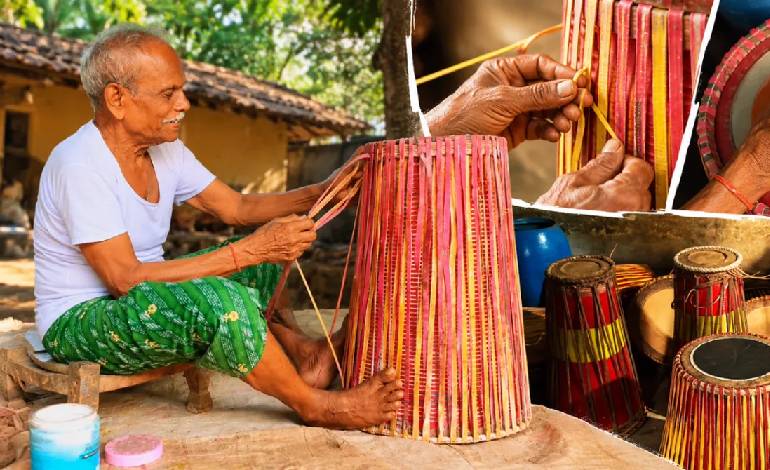
The Mandar of Jharkhand — the drum whose beats mark weddings, festivals and village celebrations across the state — has been granted a Geographical Indication (GI) tag.
The GI tag recognises the instrument’s connection to the state, the local materials used and the traditional skills of the artisans behind it.
In villages like Jarjatta in Gumla district’s Raidih block, artisans have been making the Mandar for generations using locally sourced red clay, leather and techniques passed down through families. Unlike many traditional drums that use wooden bodies, the Mandar is made with a hollow, slightly rounded clay body, covered at both ends with leather — one opening smaller than the other — and secured with braided cords. A special coating called Kiran applied on the smaller opening gives it its distinctive sound.
The effort to secure the GI tag was led by Raidih Mandar Producer Company Limited, associated with artisans from Jarjatta. The organisation had applied for GI recognition in September 2021.
The tag works on the lines of Darjeeling tea — recognising products whose reputation and qualities are closely linked to a particular place. For buyers, it helps identify authentic Mandars rooted in Jharkhand’s craftsmanship and protects the name from unauthorised use. For artisans, it is expected to improve market access beyond the state and potentially abroad.
While the GI recognition alone may not guarantee higher income, it gives the centuries-old craft a formal identity and a starting point for better marketing and livelihood support.