Jaguar spotted in Honduras cloud forest after decade-long absence; Signaling conservation success

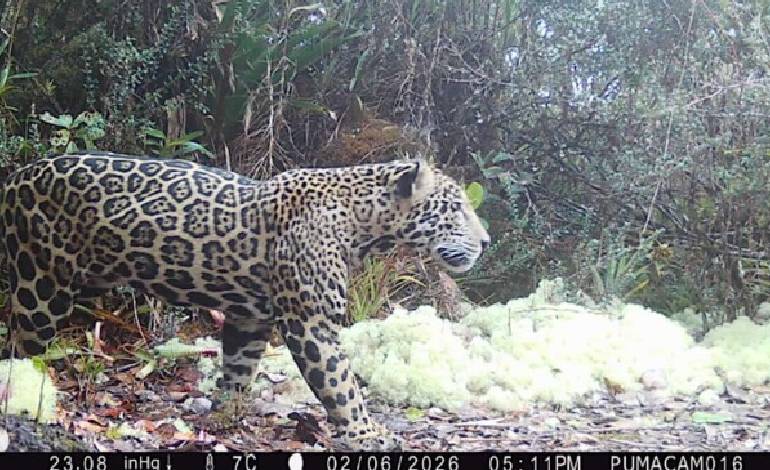
Sierra del Merendón, Honduras: For the first time in ten years, a jaguar has been captured on camera in Honduras’ Sierra del Merendón mountain range, marking a major milestone for conservation efforts in the region.
The images, recorded by the global wild cat organization Panthera as part of high-tech monitoring work, show a healthy male jaguar in cloud forest at more than 6,000 feet elevation on the range’s highest peak. The sighting occurred just two meters from the exact spot where the park’s first-ever jaguar was documented, 10 years and 2 days earlier.
The discovery also sets a new record for the highest elevation at which a “cloud jaguar” has been documented in Honduras. While jaguars are most commonly found below 3,000 meters, the sighting provides rare evidence that the species is still moving through this high-elevation corridor linking Honduras and Guatemala.
Conservationists say the images reflect a decade of sustained work on the ground. Panthera and local partners have invested in anti-poaching ranger patrols, conservation technology, and the reintroduction of prey species including peccaries and iguanas. The effort aligns with Honduras’ national vow to eliminate deforestation by 2029, despite the country having one of the highest deforestation rates in Latin America.
The Merendón range forms a critical passageway within the Jaguar Corridor, a network of connected habitats stretching from Mexico to Argentina that allows jaguars to roam, find mates, and maintain genetic diversity. Jaguars have already been lost from nearly half of their historic range and are listed as Near-Threatened on the IUCN Red List.
After ten years without a sighting, the return of the jaguar to these cloud forests offers a powerful sign that dedicated protection, restored prey populations, and habitat commitments are helping the species reclaim its range.