ISRO successfully launches NVS-03, restores NavIC to full operational strength

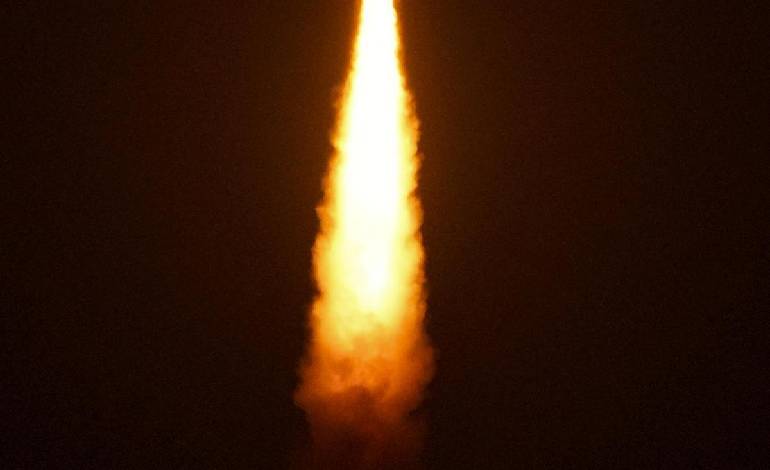
The Indian Space Research Organisation (ISRO) successfully placed the next-generation navigation satellite NVS-03 into orbit on Friday night, restoring India’s indigenous navigation system NavIC to its minimum operational configuration of four satellites.
The 2,250-kg NVS-03 was launched aboard GSLV-F18, the 20th flight of the Geosynchronous Satellite Launch Vehicle, from the second launch pad at Satish Dhawan Space Centre, Sriharikota at 11:51 pm on October 30.
About 18 minutes later, it was precisely injected into Geosynchronous Transfer Orbit (GTO).”The GSLV-F18 vehicle has successfully and precisely injected the Navigation Satellite-03 in the intended elliptical orbit,” ISRO Chairman V. Narayanan said.
The mission marked ISRO’s fastest-ever turnaround for a heavy-lift rocket — just 56 days after the GSLV-F17/EOS-05 mission in September.
In a bold technical fix after the failure of NVS-02 in January 2025, ISRO flew NVS-03 with three pyro valves open to bypass previous hurdles. The decision was validated by a national-level committee chaired by former ISRO chief Kiran Kumar after rigorous vibration and shock testing.
The NVS-02 failure was traced to the drive signal not reaching the pyro valve of the oxidiser line due to connector contact disengagement.
NVS-03, the third in the second-generation NVS series, has a mission life of 12 years. It carries an indigenously developed Rubidium atomic clock along with procured clocks and will provide L1, L5 and S-band signals for applications including real-time tracking of trains, vehicles and ships.
With three satellites — IRNSS-1B, IRNSS-1I and NVS-01 — already operational, NVS-03 restores NavIC’s Position, Navigation and Timing services, a strategic asset for the ‘One Nation, One Time’ initiative.
Prime Minister Narendra Modi congratulated ISRO, calling it an important step in strengthening self-reliance.