India’s rice fields now among world’s top methane hotspots, study finds

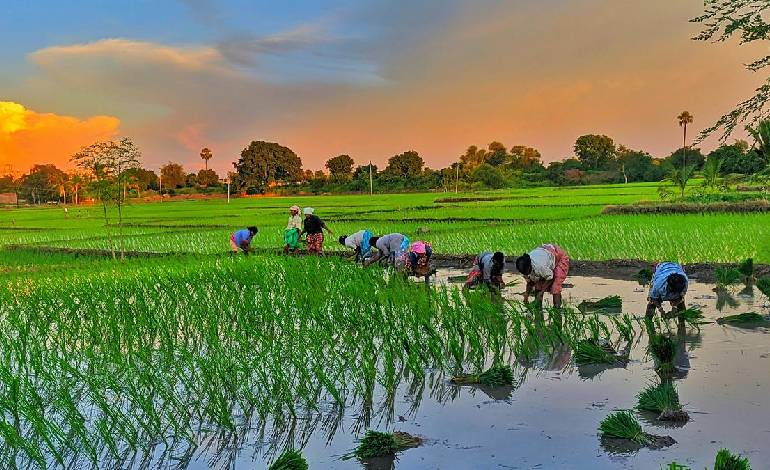
Bengaluru: India’s irrigated paddy fields have emerged as one of the world’s largest sources of methane, with emissions now comparable to those of entire countries, a new study in Nature Food has found.
According to the research, irrigated paddy fields in India release around 3.9 million tonnes of methane every year — slightly more than Germany’s total annual methane emissions.
The study also highlights a sharp global increase in greenhouse gas emissions from rice cultivation. GHG emissions from paddy fields worldwide have doubled since the 1960s. In the decade 2011-2020, paddy fields globally produced around 1.1 billion tonnes of carbon dioxide-equivalent (CO2-e) emissions every year. That is a 90.4% increase from annual emissions recorded between 1961 and 1980.
Researchers traced about half of the increase to the loss of soil organic carbon. Between 1961 and 1980, paddy fields acted as soil organic carbon sinks, removing an estimated 289 million tonnes of CO2-e annually. But that capacity has declined. In the 2010s, over a third of paddy fields worldwide began losing carbon from the soil instead of storing it.
The findings point to flooded, low-oxygen conditions in rice fields as ideal for methane-producing microbes to thrive, making rice cultivation a growing climate concern.
Scientists say the results underscore the need for changes in paddy management to curb emissions while maintaining food security.