Indian grey hornbills return to Gujarat after 50 years, breed for 4th year running

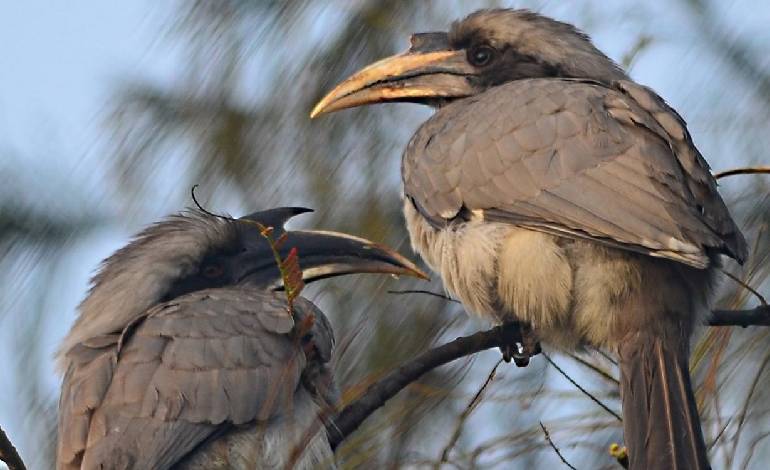
Gujarat: For the fourth year in a row, Indian grey hornbills have successfully bred in Gujarat — a state where the species had not nested for more than 50 years.
The birds, listed as “Least Concern” by the IUCN but highly sensitive to habitat loss, disappeared from Gir National Park in the 1960s. The 540-square-mile reserve, known for Asiatic lions, lacked the mature trees and fruit sources the 24-inch birds need to survive.
That changed after a strategic reintroduction program began in 2021. Conservationists released pairs and focused on protecting large, native trees with natural hollows for nesting, along with nearby fruiting trees.
The effort is now paying off. The population has grown to 40 birds and counting, with nesting pairs recorded raising chicks every year since the program started.
The Indian grey hornbill requires old-growth trees with cavities large enough to fit inside for nesting, plus an abundant supply of fruit nearby. Because of these specific needs, conservationists call it an “indicator species” for the sub-continent.“
Its flourishing reflects a flourishing landscape,” said wildlife officials. “Its decline is often an early warning of landscape decline that may soon affect other species.”
The return of breeding pairs to Gir marks a rare conservation win for a large, social forest bird in West India’s desert ecosystem, and offers hope that habitat restoration can bring back other displaced wildlife too.