How two hurricanes forced a lizard to change its grip

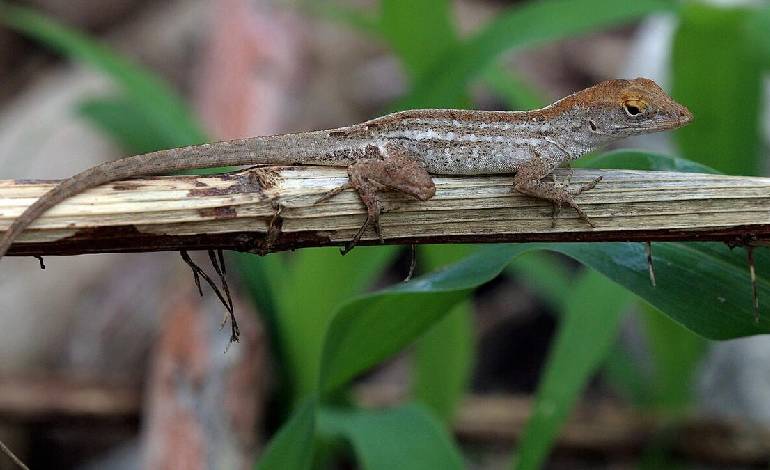
New Delhi: Two Category 5 hurricanes that hit the Caribbean 14 days apart in 2017 appear to have driven rapid physical changes in a wild lizard population, in what scientists call “evolution on steroids.”
Researchers were studying Turks and Caicos anoles Anolis scriptus on Pine Cay and Water Cay to assess the impact of invasive rats when Hurricanes Irma and Maria struck in September 2017. Six weeks later they returned and re-measured the survivors.
The difference was clear. Compared to lizards measured before the storms, survivors had larger toe pads, longer forelimbs, and shorter hind limbs.
To test why, the team brought lizards to a lab and used a leaf blower to simulate hurricane-force winds. Lizards turned to face away from the wind and held on tight. As wind increased, they lost grip with their hind legs first and were left hanging by their forelimbs.
Scientists concluded that longer hind legs acted like sails, catching wind and making lizards more likely to be blown off. Larger toe pads gave a stronger grip, and longer forelimbs helped them hang on.
The study, published in Nature in 2018, suggests hurricanes acted as agents of natural selection. Lizards with traits that helped them cling survived and passed those traits on.
Researchers note this is one of the first studies to show a single hurricane season changing the anatomy of a species. With hurricanes becoming more frequent and intense due to climate change, such extreme weather could increasingly shape wildlife evolution.