A Colorado school district has launched a new fleet of electric school buses that do more than transport students — they also help stabilize the local power grid.
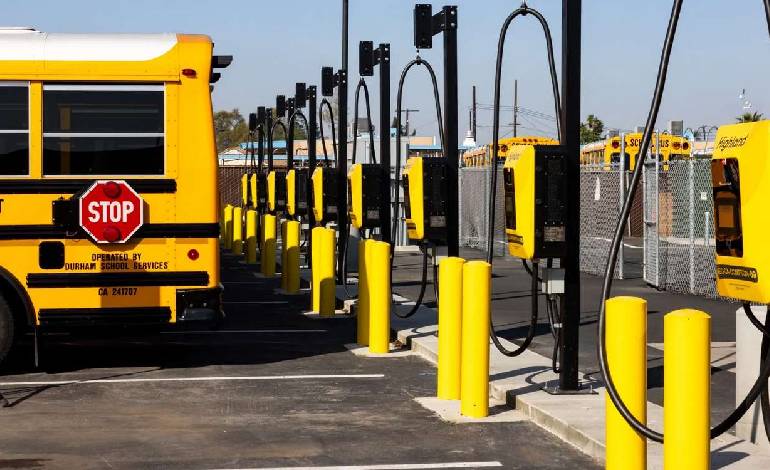
In Cherry Creek School District, 6 new electric buses charge overnight and run their morning and afternoon routes. After the last student is dropped off, the buses return to the depot where a bi-directional charging system allows them to send stored energy back to the grid during peak demand hours.
Most homes see peak electricity use in the late afternoon and early evening, when people return from work and turn on appliances, TVs and air conditioning. The buses still have hundreds of kilowatt-hours left after routes, so operator Highland Electric Fleets designed the system to “pay forward” that energy to homes instead of letting it sit unused.
There are still plenty of overnight hours with low demand to fully recharge the buses before the next school day.“This partnership works to support our environmental goals while delivering long-term operational savings,” said Jennifer Perry, Cherry Creek’s interim superintendent, at the June 3rd groundbreaking for the new bus facility.
The 6 buses and the new bus “barn” were funded by a $2.4 million rebate that Highland Electric Fleets secured through a federal government partnership. Cherry Creek School District was not charged.
The project is part of a growing trend to use vehicle batteries as mobile energy storage, helping utilities meet peak demand without building new power plants.