Climate shift may be shortening Africa’s dry season and reducing wildfires, study finds

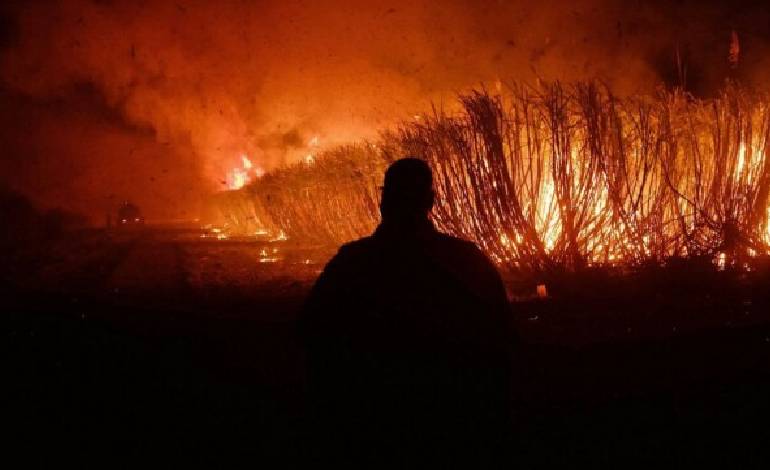
Africa, which accounts for 70% of all wildfires globally, may be seeing fewer scorched acres due to a changing climate that is delaying the start of the dry season, according to new research from the Chinese Academy of Sciences.
The study, published in Geophysical Research Letters, analyzed rainfall records across Africa from 1990 to 2023 and compared them with satellite fire observations from 2003 to 2022.
Researchers found that rains have been ending later in both the Northern and Southern hemispheres. That has delayed the onset of the dry season, when dry grasses can ignite easily. The dry season is now starting about 1.75 days later per decade in the north and 0.4 days later per decade in the south.
“Consistent with this mechanism, we find widespread declines in burned area across Africa from 2003 to 2022, with the strongest reductions during the peak fire months,” the authors wrote. Peak fire months are December in Northern Hemisphere Africa and August in Southern Hemisphere Africa.
Africa sees two fire seasons each year and accounts for half of all global CO2 emissions from wildfires.The data suggest the wet season isn’t necessarily getting longer or wetter overall. Instead, a greater share of rain is falling later in the season, keeping land from drying out as quickly.
The study noted limitations. Satellite data may miss very small fires, and the analysis could not determine fire causes, whether from lightning or land-clearing by farmers.
Despite that, researchers said the findings could help improve fire risk assessments. Fire prevention relies heavily on tracking rainfall, wind, and dryness, and accounting for later-season rainfall could give managers a better tool for predicting when the dry season will begin.