China clones wild yaks in first bid to save golden subspecies

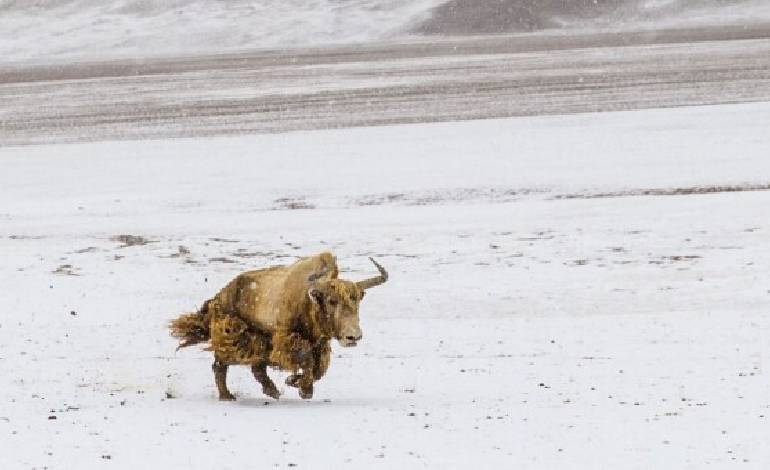
Chinese scientists have successfully cloned wild yaks for the first time, aiming to bolster the vulnerable species and rescue its critically endangered golden subspecies.
Researchers from Zhejiang University and the Institute of Plateau Biology of Xizang created wild yak embryos that were carried to term and delivered naturally by female wild yaks. The breakthrough marks the first step in using cloning to support conservation of the species.
Native to the Qinghai-Tibet Plateau, the wild yak, Bos mutus, evolved to survive high altitude and extreme cold. It is the ancestor of the domestic yak and a close relative of bison. Domestic yaks have long been vital for Himalayan communities, providing wool, milk, fuel, and transport.
A genetically distinct golden yak subspecies lives in the highest reaches of the plateau. Local legend says seven golden yaks were given as a dowry when Mount Buye married Mount Zhaxiangqian, explaining why the animals are found only in these mountains. Scientists say hunting, competition, and interbreeding with domestic yaks have driven the golden population to as few as 170 to 300 animals. Genomic studies confirm it is not a case of leucism and show the group suffers from inbreeding.
Documentarian Ka Bu, who filmed the golden yaks in 2016, said protections are at the highest level under Chinese law. More than 700 local herders and farmers patrol Changtang National Park to keep domestic yaks away and prevent poaching.
In 2023, the research team sequenced whole genomes of nearly 9,000 wild yaks to build a genetic inventory ahead of the cloning program. The cloned calves are not duplicates of living animals. They carry different genetics from their parents, a distinction researchers say is often misunderstood.
Conservationists say the cloning program could help reinforce wild yak numbers and provide a path to rebuild the golden subspecies if habitat protection continues.