‘Careers kill passion’: 50-Year tree activist urges hobby conservation over profession

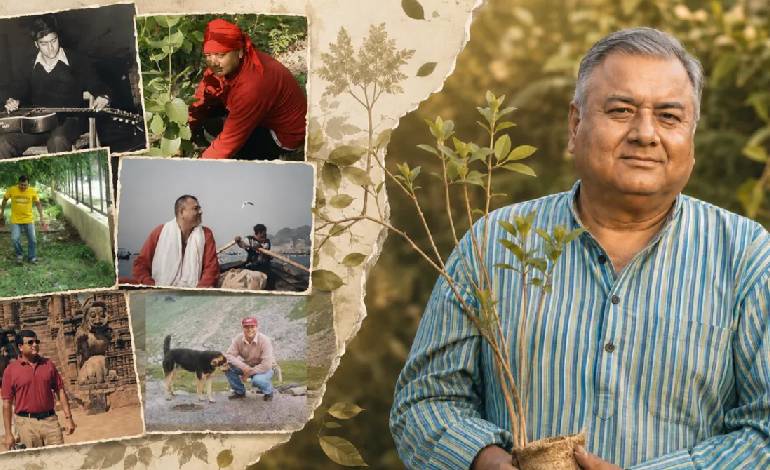
“Would you save your father, or go and give birth to 500 more children?”
That’s how Swami Prem Parivartan — ‘Peepal Baba’ — answers the question he’s waited 50 years to be asked: save a 500-year-old tree, or plant one lakh saplings?“
I would save my father. That 500-year-old tree is a mother tree. It produces millions of seeds. You are talking about one lakh saplings — that one tree may already be giving birth to 10 lakh trees,” he says.
The answer captures the philosophy of a man who has spent five decades planting. His organisation, Give Me Trees Trust, has restored 2,70,000 hectares across 226 districts and planted 25 million trees. Yet his new memoir Ghosts on Peepal Trees opens with disarming modesty: “I confess: I have hardly made a dent. But I tried. That is what matters.”
Peepal Baba began at 11, in 1977, planting nine saplings with his grandmother in Kirkee Cantonment. She taught him composting and “waste nothing”. Those nine trees still stand 48 years later.That early lesson shaped his view of conservation. “You cannot save a planet. You cannot save the Himalayas. You cannot save the Ganga. The only thing you can do is save yourself,” he said. He calls nature “4.5 billion years of silent genius” and argues human work should be service, not salvation.
It also shapes his critique of India’s tree drives. He says June 5 events are “party mode” rituals where saplings dry up by October. Despite having the world’s largest plantation budget, he claims survival rates are 2-4%, not the 40-50% reported on paper.
His solution is radical: “I would not allow a single new sapling to be planted. I would say: conserve what is already left. Our old forests. Our ancient trees. Let us fence those areas. Let us create wildlife corridors.”For young people, his advice runs counter to the NGO model: don’t make it a career. “The moment it becomes transactional, it is finished. The passion goes,” he said. He urges “hobby gardeners, hobby foresters, hobby birders” who plant on weekends.
After 50 years and 25 million trees, Peepal Baba’s lesson is smaller than the movement likes to sound: the most important tree is often not the one we plan to plant tomorrow, but the one already standing.