Bengaluru’s Hesaraghatta notified as 5,678-acre grassland reserve after 20 years

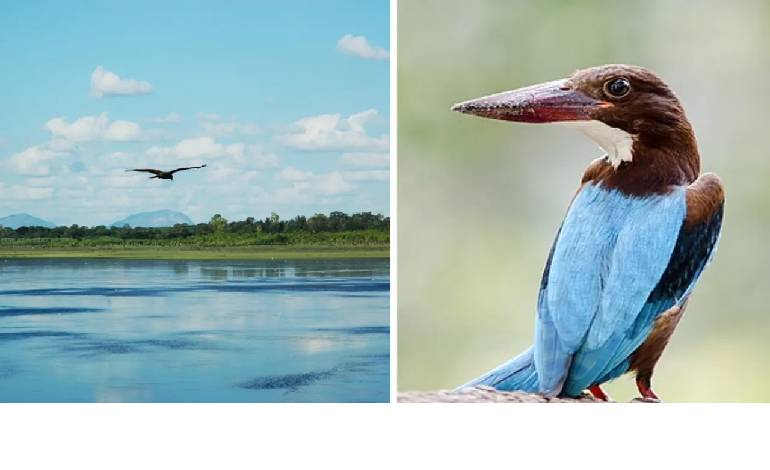
Bengaluru: At first glance, Hesaraghatta looks like a stretch of empty land on Bengaluru’s outskirts, with no towering trees or dense forests, just grass, scrub, seasonal wetlands and the broad expanse of the lakebed.
Yet this open landscape supports more than 285 bird species, along with amphibians, butterflies and other wildlife, and forms part of the Arkavathy River catchment.
In February 2025, after nearly two decades of campaigns, studies, litigation and delays, the Karnataka government officially notified 5,678 acres and 32 guntas in Yelahanka taluk as the Greater Hesaraghatta Grassland Conservation Reserve (GHGCR).
The notification describes the area as ecologically, faunally, florally and geomorphologically important and recognises its role as a catchment and water source for Bengaluru.
Researchers have documented its biodiversity for years. Ornithologist S Subramanya, who studied the landscape for decades, documented 133 bird species, 39 native shrub species, 10 mammals and five reptiles in an earlier assessment. Later accounts recorded around 235 bird species, nearly 400 insect species and about 100 butterfly species, including the rare lilac silverline, with several insect species new to science.
The government notification records more than 285 bird species, 13 amphibian species and 111 butterfly species, along with smooth-coated otters. The landscape is also used by thousands of migratory birds arriving from the Palearctic region.
Among the birds recorded is the lesser florican, classified as Critically Endangered on the IUCN Red List, and raptors including the greater spotted eagle.
The grassland is part of the Arkavathy basin and catchment of Hesaraghatta Lake and Thippagondanahalli Reservoir, playing a role in rainwater infiltration and groundwater recharge.
The push to protect it entered the courts in 2012, when photographer Mahesh Bhat and the Arkavathy Mathu Kumudvathy Nadi Punaschetana Samithi filed a PIL in the Karnataka High Court seeking protection for around 5,000 acres. A proposal to declare it a Conservation Reserve under Section 36A of the Wildlife Protection Act, 1972 was then placed before the forest department.
After years of delay, the Department of Animal Husbandry supported the proposal in 2020, but the State Board for Wildlife rejected it. Campaigners also faced local opposition fuelled by misinformation that protected-area status would take away rights or lead to release of big cats and elephants.
The final notification in February 2025 explicitly states that the rights of people would not be infringed. The Forest Department also expanded the reserve by more than 500 acres from the original proposal.
With legal status secured, the focus now shifts to management, including protection from encroachment, handling fire and invasive species, and involving local communities.