Amazon announces $20 million investment to conserve water in Colorado River Basin

Amazon on Monday announced a $20 million investment to conserve water in the Colorado River Basin, which is currently stressed by demand and historic drought.
In launching the Colorado River Basin Collaborative (CRBC) and joining existing organizations the Water Resilience Coalition and The Climate Pledge, the e-commerce giant said it hopes to help create the largest corporate water conservation effort focused on a single US watershed.
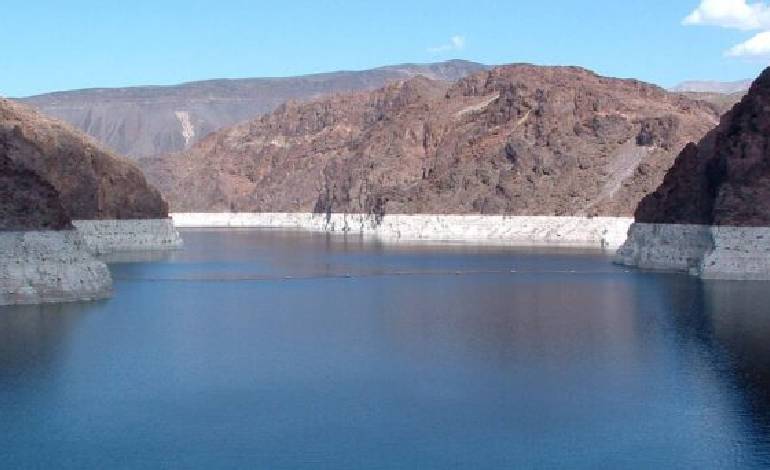
The Colorado River supplies water to nearly 40 million people and more than 5 million acres of farmland across seven US states and Mexico. But 25 years of droughts have reduced annual river flow by 20%, while its two largest reservoirs, Lake Powell and Lake Mead, are now below 30% capacity.
Interior Secretary Doug Burgum recently signed off on a management plan for the watershed extending through 2028 that will see reductions in deliveries of Colorado River water among the Lower Basin states of Nevada, California, and Arizona of 1.25 million acre-feet in each year of the next two years.
Unable to pull levers on these big decisions, the new CRBC and participating companies working under the Water Resilience Coalition will help around the margins, with plans to fund a range of water conservation projects across the basin, including irrigation efficiency, canal lining, urban leak detection and repair, and groundwater recharge.
According to spokesmen, Amazon is currently supporting two initial projects. The first is a $2.2 million commitment over three years with the Municipal Water District of Orange County, which serves 3.2 million residents. The funding will expand leak detection to communities that may not have the resources to conduct this work on their own, as well as support leak repairs.
A second project involves Arable, an agricultural technology company backed by Amazon, to identify and implement irrigation efficiency on tribal farmland in the Lower Colorado River Basin. The project uses AWS-powered sensors that give farmers real-time data on when their crops need water, helping them draw significantly less water from Lake Mead.
The initiative has already secured more than $33 million in corporate commitments, and has an eventual aim of raising $100 million.”The Colorado River Basin is one of the most important watersheds in North America, and its future depends on collaboration at scale,” said Matt Kistler, CEO of the Water Resilience Coalition.