AI detects breast cancer signs up to 6 years before diagnosis in new study

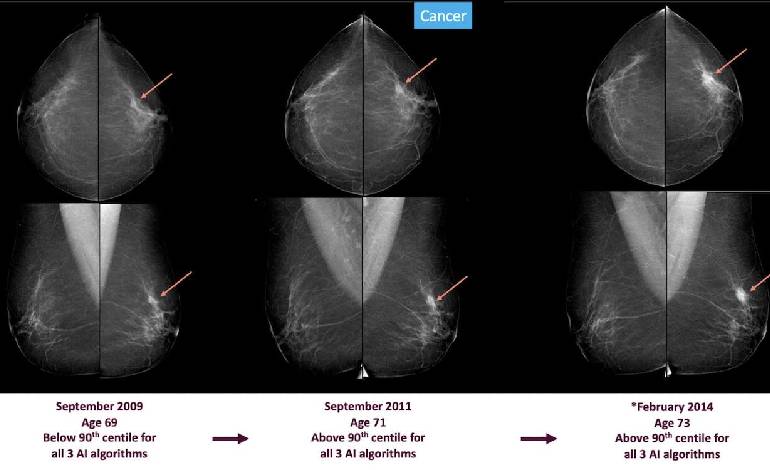
Artificial intelligence could provide an “early alert” for breast cancer up to 6 years before diagnosis, according to a large Swedish study. Researchers analyzed 88,963 mammograms from over 31,000 women and found AI could detect subtle signs of disease long before radiologists saw them.
Swedish scientists from Karolinska University Hospital tested three commercially available AI-CAD radiology systems on mammograms taken between 2008 and 2019. The AI gave each scan a cancer prediction score. Women who were later diagnosed with breast cancer had elevated scores on average, while scores stayed low for those who remained cancer-free. “Approximately 20% of breast cancer cases demonstrate mammographic signs that are already visible to AI around six years before diagnosis,” said senior co-author Prof. Fredrik Strand.
The study looked at screening exams from volunteers aged 40 to 74 across Sweden, with mammograms scheduled every two years. Two radiologists analyzed each scan at the time. Across the 10-year period, 12,072 participants were diagnosed with cancer by radiologist readers. When researchers ran the AI retrospectively, it successfully identified many of those cancers at earlier screening points.
Early detection is crucial because tumors found through screening are typically easier to treat and survival rates are far higher before cancer spreads. Other studies back this up. A Norwegian study using AI on 116,495 women found the algorithm could predict which breast was at risk 4-6 years before diagnosis. The breast that later developed cancer had AI scores about twice as high as the other breast.
Researchers say AI could help make screening more personalized. By flagging women with higher AI risk scores, doctors could target additional imaging or closer monitoring to those at elevated risk, reducing costs and missed cases. AI systems have also shown promise for detecting “interval cancers” that appear between routine screenings, with one study estimating AI could help reduce these by 30%.
Prof. Strand’s team notes the findings confirm AI’s potential to find cancer signs much earlier than human readers. Larger prospective studies are still needed to understand how radiologists would use AI in practice, especially when AI flags areas not visible to the human eye.