‘A dream come true’: Blue-and-yellow macaws return to Rio’s Tijuca forest after 200-year absence

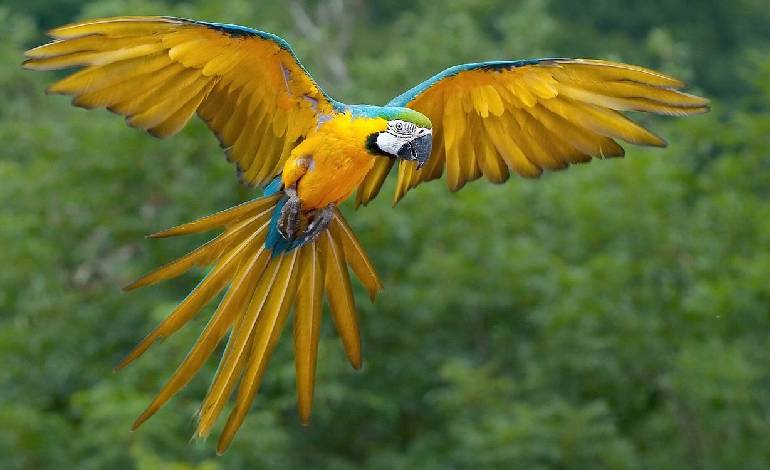
Rio de Janeiro: In the heart of the city’s largest urban park, the thick Atlantic Forest of Tijuca National Park is once again echoing with the calls of the blue-and-yellow macaw, a species absent from Rio’s forested mountains for 200 years.
Ecologists from the conservation group Refauna have reintroduced the iconic birds through a captive breeding and release program, marking a milestone for the 10,000-acre park. The macaw, a familiar symbol on Rio’s logos, clothing, and souvenirs, is now living in the wild where residents had only seen it in images.
Four macaws were recently set free among the trees as part of a trial release. “They are so magnificent. It’s no surprise that all the visitors are constantly asking how they can see them,” said Viviane Lasmar, director of Tijuca National Park. “For me, as the head of the park, it’s special. But even more so as a carioca. It’s a dream come true.
”The birds were first released for 15 days earlier this year before being returned to an aviary. Refauna plans a possible permanent release in September, when food is plentiful. The phased approach allows the macaws, which were rescued from captivity, to build flight strength for traveling up to six miles a day in search of food and to acclimatize to the sights, sounds, and tastes of the forest.
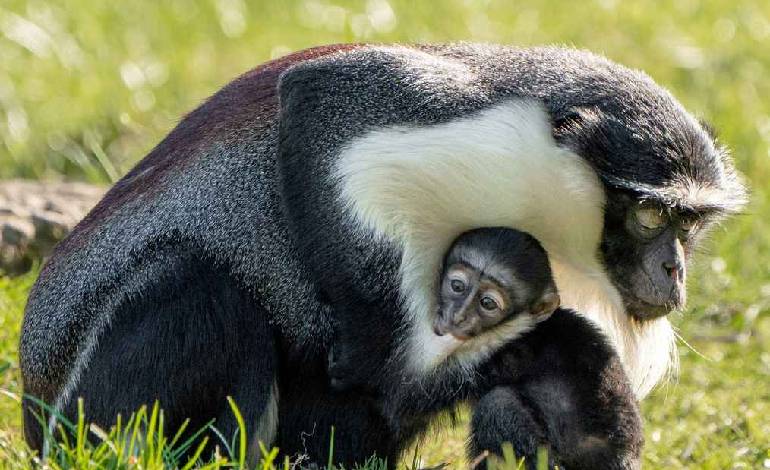
Refauna is also working to bring back other species lost to 19th-century deforestation and poaching, including howler monkeys, the red-rumped agouti, and the yellow-footed tortoise. While all have drawn excited visitors to the park’s trails, none have captured public imagination like the macaw.“The macaw really is a symbol of our efforts to bring life back to Tijuca,” said Marcelo Rheingantz, executive director of Refauna. “My dream is that one day they will fly far away from here and we will be able to see them from all over the city.”
Conservationists say the macaws could help regenerate the Atlantic Forest, a biome reduced by 90% since the colonial period but still rivaling the Amazon in biodiversity. With their sharp beaks able to crack open nuts and fruits, the birds aid seed dispersal, a process most trees in the park depend on to reproduce.
In Tijuca, where the tumult of Rio fades to a murmur beneath the canopy, the return of the blue-and-yellow macaw is more than a conservation win. For many cariocas, it’s a homecoming.