Nancy Grace Roman Space Telescope launched aboard SpaceX Falcon Heavy

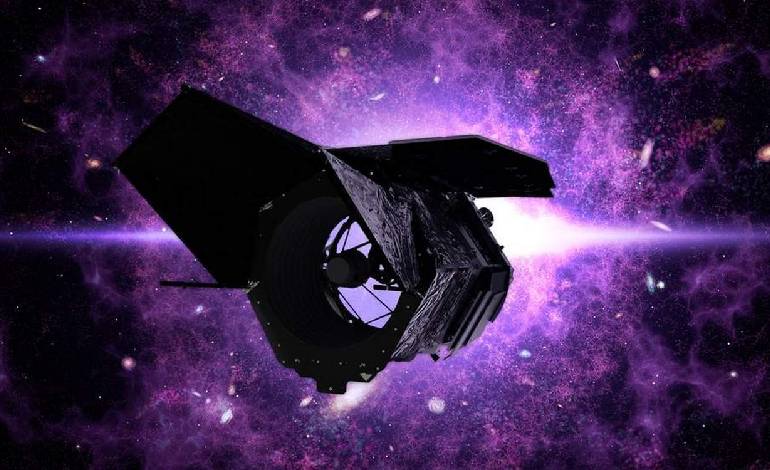
Washington: Nine months ahead of schedule, and surviving attempts in both Trump Administrations to cut its budget in half, the Nancy Grace Roman Space Telescope soared into space on Sunday afternoon aboard a SpaceX Falcon Heavy rocket launched from Cape Canaveral.
Designed to complement NASA’s existing James Webb and Hubble space telescopes by acting as a wide-angle field of view, it will have a mission life of between 5 and 10 years depending on its fuel.
“I have no doubt that Roman will become a household name alongside those great instruments of discovery,” NASA Administrator Jared Isaacman told reporters after the launch, referring to Webb and Hubble.”It feels like I’m on the edge of a precipice, and we’re just about to set a foot off into the unknown,” Julie McEnery, Roman telescope senior project scientist, told reporters at a post-launch news conference.
Named after American astronomy pioneer Nancy Grace Roman, this new first-rate observatory has a different set of tools for a different sort of job.
Rather than using infrared vision to pinpoint moments or objects from the earliest periods of the universe, or dazzling the public with images of nebulae, the NGR will look to another secretive aspect of space: dark matter and dark energy, strange material that makes up about 95% of all the matter in the universe.
And while Webb can show us the atmospheres of exoplanets in extreme detail, Roman will be the master of finding them, thanks to the inclusion of a first-of-its-kind “active coronagraph” instrument.”The combination of sensitivity, angular resolution, and speed, those are the key things that differentiate Roman from all the other observatories that NASA currently and in the future would have,” says Dominic Benford, Program Scientist for NGRST.”
The unique capabilities that Roman will bring to bear are a combination of being able to cover a relatively wide field of view, at a very high angular resolution, with the kind of sensitivity that telescopes in space are able to provide, and be able to do this relatively quickly,” he said.
It could survey the entire Milky Way galaxy in about a month, compared to a century needed by Hubble.