‘Little red dot’ mystery may be young black holes buried in gas, study finds

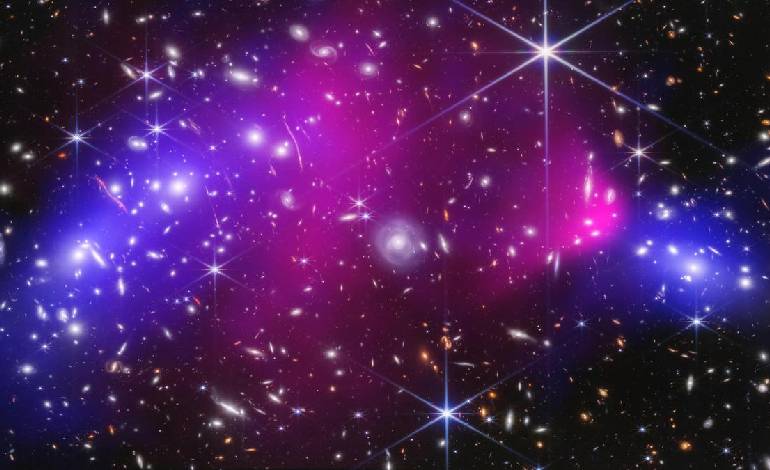
An international team of astronomers has spotted an unusual object from when the universe was just around 660 million years old — a discovery that may help explain one of the James Webb Space Telescope’s most intriguing finds.
When JWST looks deep into space, it detects many small, red points of light. Astronomers call them “little red dots,” or LRDs. Their exact nature has been unclear since they were first discovered.
The new study points to an answer for at least some of them: unusually young and rapidly growing black holes surrounded by an enormous amount of dense gas and dust.
The object found by the team appears to be a black hole in the very early universe, still in a fast growth phase and shrouded in thick gas. That surrounding dust could be what makes it look red and compact from Earth.
Researchers say this “dusty” black hole could be a key to understanding the LRD population JWST has been finding across the early cosmos.
The team’s findings add to growing evidence that supermassive black holes began forming and feeding much earlier than previously thought, and that gas and dust played a major role in hiding them from view.
Further observations are planned to determine how common such dusty, young black holes are and how they fit into the story of galaxy formation at cosmic dawn.