Scientists discover “super-contraceptive” scent that keeps naked mole rat queens in power

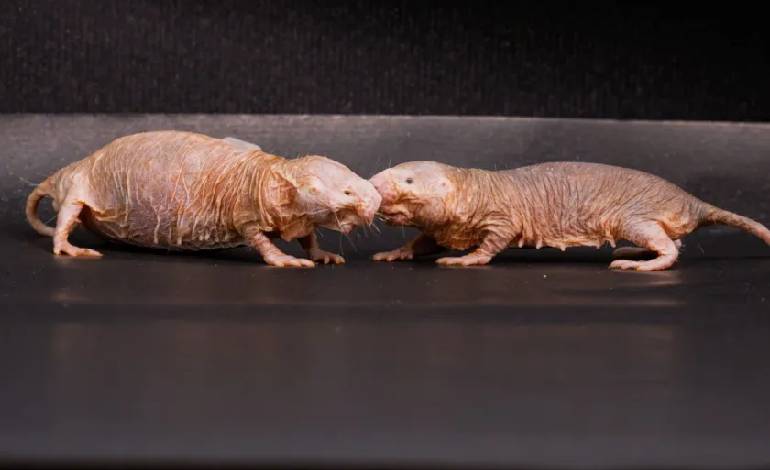
Berlin: A single chemical released by the queen of a naked mole rat colony is what keeps all other females from breeding, scientists have found — a discovery researchers are calling a “game changer” for understanding mammalian social hierarchies.
The molecule, isopropyl myristate (IPM), is produced in the queen’s reproductive organs and acts like a “super-contraceptive” for the rest of the colony.
How it works
Naked mole rats (Heterocephalus glaber) live like bees and ants, with one breeding queen and dozens of workers and soldiers. Only the queen reproduces, but until now it wasn’t clear how she suppressed rivals.
Researchers at the Max Delbrück Center in Berlin, led by neuroscientist Mohammed Khallaf, compared the scents of hundreds of mole rats. They found IPM was present in abundance in queens and almost entirely absent in other colony members. Production peaks during ovulation.
Brain scans showed that when non-breeding females smelled IPM, their olfactory neurons were activated. The scent also altered hormone levels — lowering prolactin and progesterone in subordinates.
In experiments, spraying IPM daily into cages with male-female pairs prevented all females from becoming pregnant. Without it, almost all became pregnant.
In the most dramatic test, researchers removed a queen from a colony and applied IPM daily. For three months there were no fights for succession and no breeding. “We produced peacefulness,” said team member Gary Lewin.
Why it matters
Until now, scientists thought queens maintained control through aggression — “pushing and shoving”. The new study shows chemical communication does the heavy lifting, similar to queen pheromones in bees and ants.
The findings, published in Nature, help explain a long-standing mystery: why only one female in a naked mole rat colony reproduces. IPM was found uniquely in queens and correlated with reproductive readiness.
The wrinkly, underground rodents are one of only two eusocial mammals and are known for extreme longevity — some live up to 39 years.
Researchers say the discovery reveals a fundamental mechanism of reproductive suppression in mammals and could offer insights into how chemical signals govern social behavior.