The story and science behind Ferris Wheels: From Chicago 1893 to the London eye

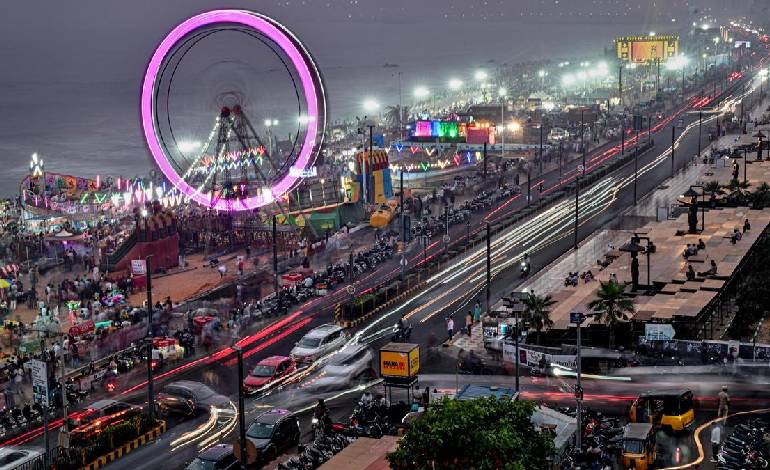
The Ferris wheel is more than just a fairground attraction. It’s a blend of engineering ambition and physics that began as a bold gamble and ended up defining city skylines. The story starts at the 1893 Chicago World’s Columbian Exposition, where engineer George Washington Gale Ferris Jr. built the first “Ferris wheel” to outdo Paris’ Eiffel Tower from the 1889 fair. Standing 80 meters tall with 36 cars carrying 2,160 people, it charged riders 50 cents per ride. Ferris didn’t live long enough to see its legacy, but his invention outlived him and became a permanent fixture at fairs and landmarks across the world.
At its core, a Ferris wheel works on the same structural principle as a bicycle wheel. The bottom half of the wheel supports the entire structure at any point during rotation. Ferris used circle geometry and trigonometry for his original design, and that same math still holds for wheels built today. To keep the ride smooth and safe, the wheel relies on three forces: centripetal force, gravity, and torque. Centripetal force pulls riders toward the center as they move in a circle, which is why large observation wheels rotate slowly to keep the ride comfortable. Gravity and torque work together to keep the cabins upright as the wheel turns.
The physics also explains what you feel during the ride. Due to how centripetal and gravitational forces interact, a rider feels lighter than their true weight at the top and heavier at the bottom. This is called “apparent weight”. In essence, every ride is a live demonstration of rotational dynamics, gravity, and circular motion – even if you’re just enjoying the view.
For nearly a century, Ferris wheels remained carnival rides. That changed with the London Eye. Opened ceremonially on December 31, 1999, and allowing passengers from March 2000, its success marked a monumental shift in design and perception. After the London Eye, giant observation wheels became architectural icons rather than temporary fair attractions. Today they’re tourist landmarks, teaching tools for trigonometry, and symbols of engineering that trace back to one man’s idea in Chicago, 1893.