Singing Mice Puff Up Throat Sacs to Create Sweet Songs

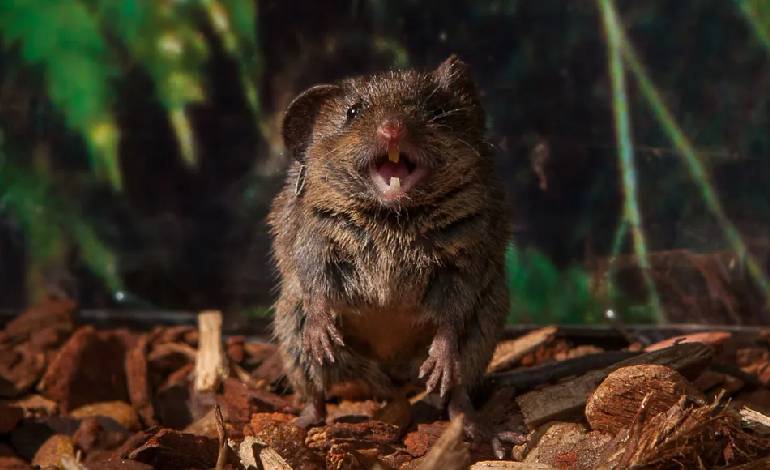
Lausanne: Alston’s singing mice inflate tiny air sacs in their throats like balloons to produce elaborate whistling songs, researchers report May 6 in Proceedings of the Royal Society B. The discovery marks the first known case of an animal using airway sacs to directly generate sound, not just modify it.
Native to forests in Mexico and Central America, Alston’s singing mouse (Scotinomys teguina) lives up to its name. Both males and females communicate with 10-second trains of high-pitched notes. Each song packs around 100 individual breaths and notes, a speed and complexity unmatched by any other rodent. The tunes are thought to attract mates and warn rival males.
To find out how the mice pull off the feat, Samantha Smith, an integrative biologist at the University of Lausanne, and colleagues dissected the larynges, or voice boxes, of euthanized singing mice. They hooked the tiny organs to a tube and blew air through while recording with a microphone and camera.
“A larynx is basically just a tube with a valve in it that can open and close,” says Smith, who did the work at the University of Texas at Austin. Every time the larynx produced sounds in the right pitch range for the natural song, a pouch inside the larynx inflated. When researchers blocked the sac with wax or small metal balls, the larynx went silent. Cutting the sac had the same effect.
Other rodents have air sacs too, but do not appear to use them this way. In primates, birds, frogs, and reptiles, airway sacs typically alter or amplify sounds made elsewhere in the respiratory tract. In singing mice, the sacs themselves make the song.