Oak trees trick hungry caterpillars by holding back spring leaves, satellite study shows

Berlin: Oak trees can remember caterpillar attacks and fight back the next year by delaying their leaves, new research shows.
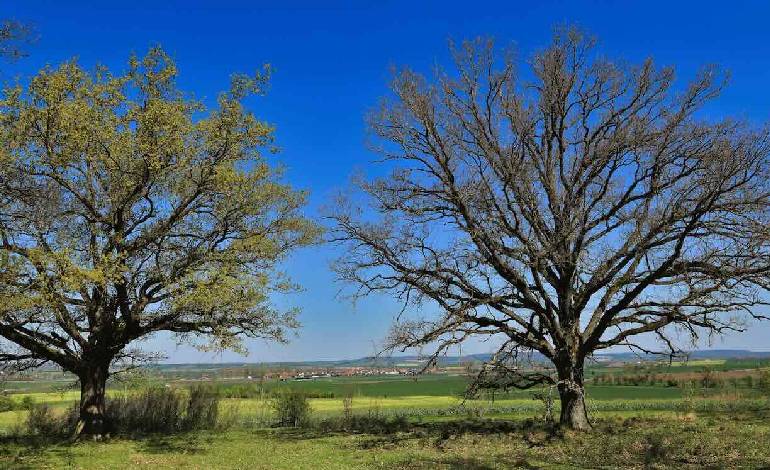
Using satellite data, scientists in Germany discovered that oaks push leaf emergence back by three days if they suffered heavy caterpillar infestations the previous spring. The delay starves newly hatched insects that depend on tender, nutrient-rich young leaves.
Caterpillars typically hatch in early spring right as oak leaves unfurl. That timing gives them an easy meal. But trees that were hit hard one year seem to adjust their clocks the next. By keeping leaves tucked inside buds for three extra days, oaks leave the hatching larvae with nothing to eat.
The payoff is dramatic. The brief delay slashes insect survival rates and cuts leaf damage by 55 percent, according to the study in Nature Ecology and Evolution.Lead author Dr. Soumen Mallick of the University of Würzburg said the strategy beats chemical defenses. “Producing more bitter tannins costs the tree a lot of energy. Simply waiting three days is cheaper and highly effective.”
The work overturns the idea that trees leaf out based only on weather. “Trees don’t just follow temperature and daylight,” Mallick said. “They respond flexibly to biological threats too.”The findings reveal a hidden level of forest intelligence: oaks can learn from past pest pressure and time their growth to survive.