China marks 40 years of wild horse return program as przewalski’s population hits 900

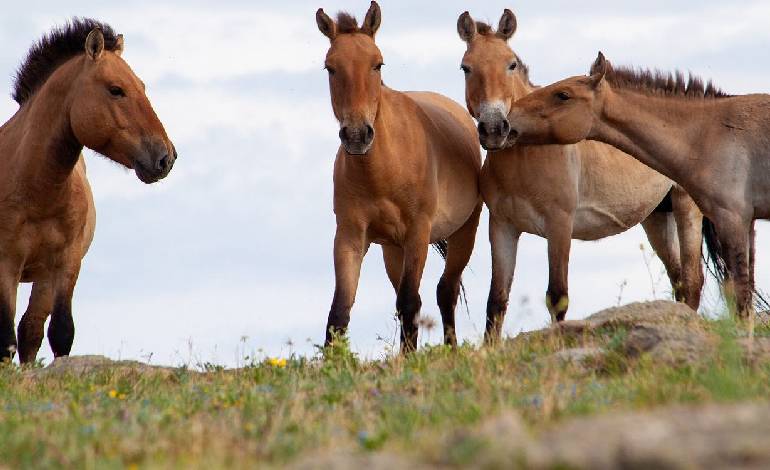
Dunhuang: Whether on Earth or in the Heavens, it’s the Year of the Horse in China — and conservationists have reason to celebrate.
This year marks the 40th anniversary of one of the country’s earliest conservation efforts: the Wild Horse Return Program. Since 1986, the program has been breeding, relocating, and protecting the Przewalski’s horse across China’s vast grasslands.
Data from the project’s monitoring arm for 2025 shows the wild horse population in China is now 900-strong and growing autonomously. That accounts for one-third of the total global population of Przewalski’s horse, the last non-domesticated horse species on the planet.
In 1985, the species was considered extinct in the wild in China. The animals alive today trace back to a few individuals kept in zoos and breeding centers in Europe. The rare horse has since become a flagship symbol of ecological restoration. It is also a recent cultural icon — inspiring “Chengcheng,” the mascot for the 2026 Year of the Horse Spring Festival Gala.
A large portion of the 900 animals are located in Dunhuang West Lake Nature Reserve in Gansu Province. Known in antiquity as the “Jade Gate,” the entrance to China proper, the reserve now hosts 200 animals roaming across 28 herds.
Their numbers over the last 15 years have been bolstered by relocations from the Gansu Endangered Animal Protection Center in Wuwei city. The center pioneered a long-distance road transport method called “loose relocation.”
Rather than anesthetizing and crating the animals, which can sometimes lead to casualties, the method allows them more room to move during transport. At one point, the Wuwei center transported 28 wild horses over 600 miles to the reserve. Forty years on, the Wild Horse Return Program has turned a species once lost in the wild into a growing, self-sustaining population — and a national symbol of conservation success.