Tectonic plates, not just waves, carved the Twelve Apostles: New study reveals

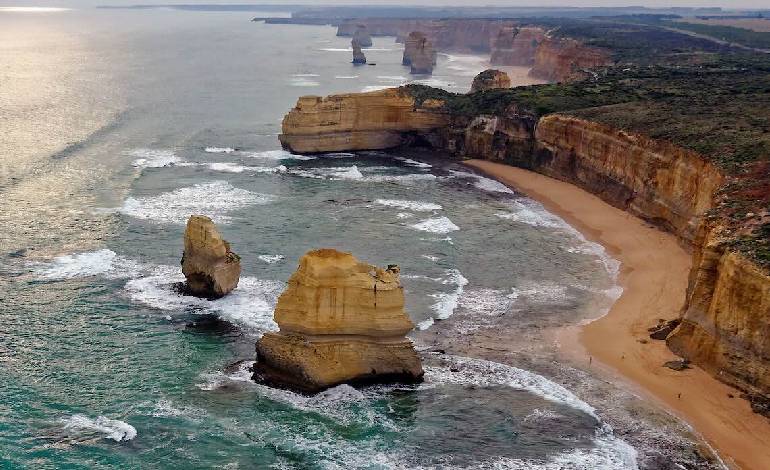
Research from the University of Melbourne has for the first time confirmed the ancient force that shaped the iconic Twelve Apostles — the 25-mile stretch of limestone formations along Australia’s southern coast.
The evidence is in: tectonic plate movements over millions of years lifted the giant landmass out of the sea. “Until now, the evolution of the Twelve Apostles had not been well known,” said lead researcher Associate Professor Stephen Gallagher from the School of Geography, Earth and Atmospheric Sciences.
The study, published this week in the Australian Journal of Earth Sciences, found that while tectonic shifts pushed the formations upward, 20,000 years of wind and wave erosion sculpted them into the sea stacks seen today.
The result is one of the world’s best-preserved and most accessible records of ancient climates and sea levels. “Much like an environmental time capsule, each layer of these giant structures preserved information about the Earth’s climate, tectonic activity, plants and animals over millions of years, including a key time about 13.8 million years ago when the climate was much warmer than what it is today,” Gallagher explained.
He added: “We are using this ‘window back in time’ to understand where temperatures and sea levels may be heading on our current path of climate change.”