“Milk comes in a tetra pack”: How one father’s moment of realization became a rural classroom

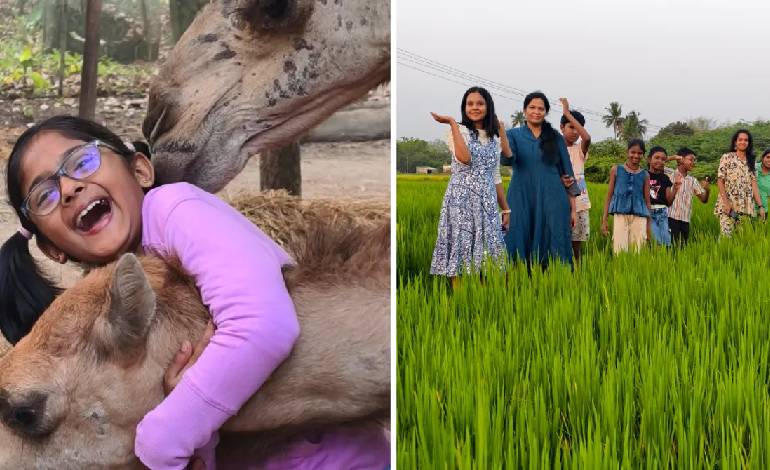
Tamil Nadu: “I remember someone asking my daughter where milk comes from,” says Kiruba Shankar. “She said it comes in a tetra pack.” It seemed like a passing remark at the time. But for Kiruba, who grew up in a farming family, the answer stuck. He had always known food through soil, animals, and effort. His daughter’s reply showed how far that understanding had shifted.
Across many urban homes today, food arrives without context. Milk comes in cartons, vegetables in neatly packed trays, and meals with a tap on a screen. The link between what we eat and where it comes from has quietly faded.
For Kiruba Shankar, that gap isn’t abstract. Years of working at the intersection of education and agriculture let him see it up close, in everyday conversations with children. Moments like his daughter’s tetra pack answer became part of a larger pattern.
That pattern ultimately shaped something unusual in rural Tamil Nadu: a learning space designed to reconnect children with the origins of food. Built on his dual roots in farming and education, the initiative aims to bridge what he calls a widening distance between plates and farms.
Where textbooks stop, Kiruba’s classroom begins — with soil, seeds, and animals. It’s an attempt to make sure the next generation knows milk doesn’t start in a carton.